If Kharg Island is invaded, it would provoke severe retaliation, and Trump could face a vote of no confidenceTrump ‘wants to take the oil in Iran’ and considers seizing Kharg Island
US President says taking oil is his 'favourite' plan but that 'stupid people' in America are questioning it
Donald Trump has said he wants to “take the oil in Iran” and is considering the option of seizing the export hub of Kharg Island.
The US President, in an interview with the Financial Times, said his “preference” would be to take the oil under plans similar to its aims in Venezuela, where it hopes to control the industry.
“To be honest with you, my favourite thing is to take the oil in Iran but some stupid people back in the US say, ‘Why are you doing that?’ But they’re stupid people,” he said.
Speaking about whether or not the US could seize Kharg Island, he said: “Maybe we take Kharg Island, maybe we don’t. We have a lot of options,” adding they could “take it very easily”.
Kharg Island is Iran’s main oil terminal in the Persian Gulf and handles roughly 90 per cent of Iran’s 1.7 million barrels of crude exports per day, making it one of the country’s most important targets.

Trump 'wants to take the oil in Iran' and considers seizing Kharg Island
US President says taking oil is his 'favourite' plan but that 'stupid people' in America are questioning itinews.co.uk

You are using an out of date browser. It may not display this or other websites correctly.
You should upgrade or use an alternative browser.
You should upgrade or use an alternative browser.
America and Israel Strikes Iran : Supreme Leader Ali Khamenei Dead
- Thread starter Blacks4̶T̶r̶u̶m̶p̶
- Start date
- Featured
Tommy Kwesule.
Elder Lister
Why America’s hard-power military might isn’t ending the Iran war
Donald Trump is fond of telling Ukraine it has no cards in its attritional war with Russia. But the US president is facing growing questions about the strength of his own deck in the war with Iran.
Superficially, the United States, with more than three times Iran’s population and the world’s most powerful military and economy, has an overwhelming edge in the balance of power. Add in Israel’s tested military and all-seeing intelligence machine and it seems an unfair fight.
But Iran — by turning its few areas of advantage into painful pressure points for the US, and by forcing its repressed people to absorb massive punishment — has done more than survive. Some analysts believe it has seized the strategic initiative.

Mwalimu-G
Elder Lister
The mzungu who edited this story needs to come down to reality. The schoolgirls bombed by some cowboy jet jockeys didn't ask to be killed. Vita si yelele mama.Iran using children in security roles in war, reports and witnesses say
View attachment 112901
Iran using children in security roles in war, reports and witnesses say
18 hours ago
Share
Save
Add as preferred on Google
Ghoncheh HabibiazadBBC News Persian
Majid Asgaripour/WANA/Reuters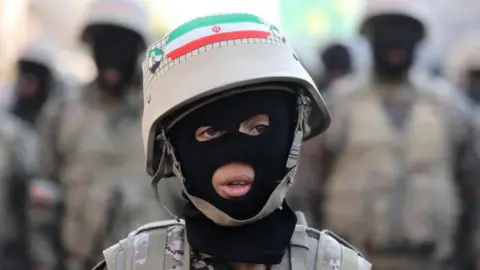
A member of Iranian volunteer militia (Basij) attends a march in Tehran in January 2025, before the current war
The death of an 11-year-old Iranian boy reportedly in an air strike while manning a security checkpoint alongside his father in Tehran has thrown focus on a new initiative to recruit children into the security services.
Alireza Jafari's mother Sadaf Monfared told the municipality-run newspaper Hamshahri that the pair had been helping Basij volunteer militia patrols and checkpoints to "maintain the security of Tehran and its people" when they were killed on 11 March.
Last week, an Islamic Revolutionary Guard Corps (IRGC) official in Tehran told the IRGC-affiliated Fars News Agency that the organisation would enrol "volunteers" aged 12 and above.
Eyewitnesses have told the BBC they have seen children, including some armed, in security roles in the capital and other cities.
Foreign-based human rights organisations have also reported Alireza's death. The Kurdish group Hengaw said he was a "fifth-grade student" who was killed while present at a checkpoint in Tehran.
Iran using children in security roles in war, reports and witnesses say
An 11-year-old is reported to have been killed in an air strike while manning a checkpoint in Tehran.www.bbc.com
Mwalimu-G
Elder Lister
!and by forcing its repressed people to absorb massive punishment
Should Iran have just rolled over so that her population is not "punished"???
Tommy Kwesule.
Elder Lister
That was a serious miscalculation on America’s part and shouldn’t be defended. At the same time, Iran’s actions raise a different but equally troubling issue: the deliberate use of children in situations where they are exposed to harm. With a population of around 90 million, there is clearly a substantial pool of adults who could be mobilized instead. So the question is, why rely on children at all? It’s difficult not to wonder whether it’s because they are more impressionable and easier to control, given that they had to kill tens of thousands of protestors, which suggests a recalcitrant population, or because their suffering generates stronger emotional reactions and international attention when things go wrong. Even in wartime, “tough measures” shouldn’t extend to putting children directly in danger. Some lines should remain non-negotiable.The schoolgirls bombed by some cowboy jet jockeys didn't ask to be killed. Vita si yelele mama.
Tommy Kwesule.
Elder Lister
Trump interview: I am strongly considering pulling out of Nato
Exclusive: US president tells The Telegraph alliance is a ‘paper tiger’ and claims UK does not even have a navyDonald Trump has told The Telegraph he is strongly considering pulling the United States out of Nato after it failed to join his war on Iran.
The US president labelled the alliance a “paper tiger” and said removing America from the defence treaty was now “beyond reconsideration”.
It is the strongest sign yet that the White House no longer regards Europe as a reliable defence partner following the rejection of Mr Trump’s demand that allies send warships to reopen the Strait of Hormuz.
Tommy Kwesule.
Elder Lister
Report: Netanyahu says Israel ‘forming alliances with Arab countries that are talking about fighting together on our side’
Prime Minister Benjamin Netanyahu told ministers at a cabinet meeting today that Israel is “forming alliances with Arab countries that are talking about fighting together on our side,” the Hebrew-language Maariv daily reports.
“In the past, I had secret conversations with Arab leaders,” Netanyahu reportedly said. “I told them, ‘As soon as Iran can, it will conquer you and overthrow your kingdoms.’ Back then, they didn’t really internalize things. Today they understand.”
Yesterday, Ambassador to Washington Yechiel Leiter said on a podcast that Gulf countries are asking Israel for help.
Mwalimu-G
Elder Lister
What you should appreciate is that the concept of defending the homeland is a value enculturated at the cradle for these communities. Just North of Meru, Laikipia, lake Baringo and Kitale and going on North into the middle East and all the way to Azerbaijan and beyond, guns are introduced to youngsters from as early as seven or eight and what they do at the slightest warning of danger is to pick their gun and join the line.With a population of around 90 million, there is clearly a substantial pool of adults who could be mobilized instead. So the question is, why rely on children at all? It’s difficult not to wonder whether it’s because they are more impressionable and easier to control,
The concept of child soldiers is a neo-western concept that fails to appreciate this fact.
Tommy Kwesule.
Elder Lister
I understand the point about cultural context, but I don’t think it resolves the core issue. Just because something is normalized or taught from a young age doesn’t automatically make it acceptable, especially when it involves exposing children to serious harm. History is full of practices that were once deeply “enculturated” but are now rejected because they conflict with basic standards of human welfare.What you should appreciate is that the concept of defending the homeland is a value enculturated at the cradle for these communities. Just North of Meru, Laikipia, lake Baringo and Kitale and going on North into the middle East and all the way to Azerbaijan and beyond, guns are introduced to youngsters from as early as seven or eight and what they do at the slightest warning of danger is to pick their gun and join the line.
The concept of child soldiers is a neo-western concept that fails to appreciate this fact.
It’s also important to acknowledge the conditions that make these practices more likely in the first place. Prolonged conflict, insecurity, weak institutions, and limited access to education can push societies into survival mode, where everyone, including children, is seen as a potential contributor to defense. That context maybe helps explain how such norms develop, but it doesn’t justify them.
But also important, is the need to recognize childre's vulnerability, their limited capacity for informed consent, and the long-term harm such experiences can cause. What we have today is a far more advanced understanding of developmental psychology. We know that children’s brains are still developing, particularly in areas tied to judgment, impulse control, and risk assessment. Exposure to violence and the burden of life-and-death responsibility at a young age can have lasting consequences: trauma, emotional dysregulation, desensitization, and difficulty forming stable relationships. These effects don’t just remain at the individual level, they ripple outward, shaping families, communities, and even future generations, potentially reinforcing cycles of instability and violence. In that sense, the persistence of these practices may be part of a broader pattern, not just a cultural inheritance but a cycle that is continually reproduced.
Focusing on Iran brings this into sharper relief. When you look at the demographics, the argument becomes even harder to defend. Iran’s population has grown rapidly over the past century and now stands at around 90 million. Its population structure shows a large share of working-age adults, millions of people in their 20s, 30s, and 40s. This is not a country facing a shortage of able-bodied individuals; there is a substantial pool that could be mobilized if necessary. So the question remains: why rely on minors at all, when there is no clear demographic need to do so? Are children the last option?
It becomes even more difficult to justify when you consider that Iran is simultaneously investing in modern military capabilities, including advanced force multipliers like Shahed drones. If the state is capable of adopting increasingly sophisticated methods of warfare, why does it still tolerate, or rely on, cultural practices that expose children to the direct realities of conflict? At that point, it no longer looks like necessity rooted in survival, but rather a continuation of a practice that should be reexamined, if not abandoned altogether.
Tommy Kwesule.
Elder Lister
Trump’s croaky and absurd Iran speech shows just how badly the war is going
The US President fails to deliver a convincing speech and glosses over the tangible impacts of the conflictInstead, Trump’s 20-minute address felt like a stump speech during his last election campaign, only with a slight Middle Eastern flavour.
Speaking from the White House, the US President sounded croaky, tired and looked like he didn’t want to be explaining yet again how well the war was supposedly going.
For a man who made his living selling real estate, this was one pitch that even Trump couldn’t make sound convincing.
It felt like the same tired, unbelievable talking points we’ve been hearing for a month now from senior White House officials and cabinet members.
Trump said that America’s core objectives were “nearing completion” and repeated that he expected the fighting would go on for another two to three weeks.
In an absurdly simplistic comparison, Trump reeled off the lengths of time America had been involved in other wars, such as WWII and the Korean War.
“We are in this military operation for 32 days and the country (Iran) has been eviscerated and is no longer a threat,” Trump said.
Lest we forget, former US President George W Bush made his infamous “Mission Accomplished” speech six weeks after the invasion of Iraq, a war that would go on for more than eight years.
At least Trump stuck to the script on the objectives of the war: making sure Iran never gets nuclear weapons, destroying the Iranian navy, degrading its missile capabilities and stopping it from being able to support terrorist allies in the region.
The problem was that earlier in the day, he told Reuters that he wasn’t bothered about getting hold of Iran’s supplies of enriched uranium.
Trump had said: “That’s so far underground, I don’t care about that”.
When the US President turned to the Strait of Hormuz, the narrow passage which carries 20 per cent of the world’s supply of oil and has been shut down by Iran, he went from optimistic to absurd.
According to Trump, the Strait will “open up naturally” once the war ends because the Iranians need money from oil, too.
In other words, Iran will magically give up its Trump card without anything in return.
What Americans were crying out for was some empathy about gas prices, which have hit $4 (£3) a gallon for the first time since 2022, when the Ukraine war began.
At a time when the cost of living was already the number one concern of voters, paying higher prices for petrol is proving crippling to many.
Instead, the US President glossed over the economic damage and made no mention of the fallout around the world, which has led some Asian nations to take drastic measures because of shortages of petrol.
Trump said the higher gas prices were a “short-term increase” which, in his fantastical reading of the tea leaves, would come down soon.
The only good point to come out of the address was that Trump didn’t attack Nato as strongly as had been expected.
Trump has been furious about the refusal of Western nations, the UK in particular, to help the military campaign and re-open the Strait of Hormuz.
In the speech, he urged Britain and the EU to buy oil from the US and go to the Strait and “just take it”, referring to the oil.
You might be forgiven for thinking why Trump bothered with the speech at all, but the tell may be in how badly the war is actually going.
With the US midterm elections just seven months away, the polling has been brutal for Trump and is getting worse by the day.
Hours before Trump spoke, a new CNN poll found that just one in three Americans believe the US President has a “clear plan to handle the situation in Iran”.
Two separate surveys released last week by The Associated Press and Quinnipiac University put Trump’s overall approval at just 38 per cent, a new low for him.
A University of Massachusetts Amherst survey put it even lower, at 33 per cent.
In the speech, Trump tried to portray the bombing of Iran as an “investment in your children and grandchildren’s future”.
“The whole world is watching and they can’t believe what they are seeing”, Trump said.

Trump's croaky and absurd Iran speech shows just how badly the war is going
The US President fails to deliver a convincing speech and glosses over the tangible impacts of the conflict
inews.co.uk

Drumf and his cronies wavae combat uniform sasa
Tommy Kwesule.
Elder Lister
I love Trump because he is fast-tracking the fall of American Imperialism.
Tommy Kwesule.
Elder Lister
You are assuming they won't find qualified people who will say yes to everything Trump wants.Drumf and his cronies wavae combat uniform sasa
Tommy Kwesule.
Elder Lister
US F-15E pilot likely captured by Iranian forces: Local media
Iranian state media released images of debris from a U.S. Air Force F-15E Strike Eagle fighter jet on April 3, 2026. (Photo via Tasnim News Agency)
A U.S. pilot may have been captured by Iranian forces after a fighter jet was shot down over central Iran on Friday, according to Iranian media and statements from the Islamic Revolutionary Guard Corps (IRGC).
I
nitial information indicated that U.S. forces attempted to locate and extract the pilot, but some sources suggested the pilot was likely captured by Iranian military units.
Investigations by Tasnim reporters in the provinces show that the Americans are using several Black Hawk helicopters, a Hercules 130, and reconnaissance drones to search for the fighter pilot.
Axios also confirmed that Iran has shot down a U.S. fighter jet, per Iranian media and a source familiar with the incident, and a search and rescue effort is underway to locate the two crew.

US F-15E pilot likely captured by Iranian forces: Local media - Türkiye Today
Reports say a US F-15E was downed in Iran, with the pilot ejecting and possibly captured, though claims remain unconfirmed and conflicting
 www.turkiyetoday.com
Tommy Kwesule.
Elder Lister
Tommy Kwesule.
Elder Lister
Tommy Kwesule.
Elder Lister
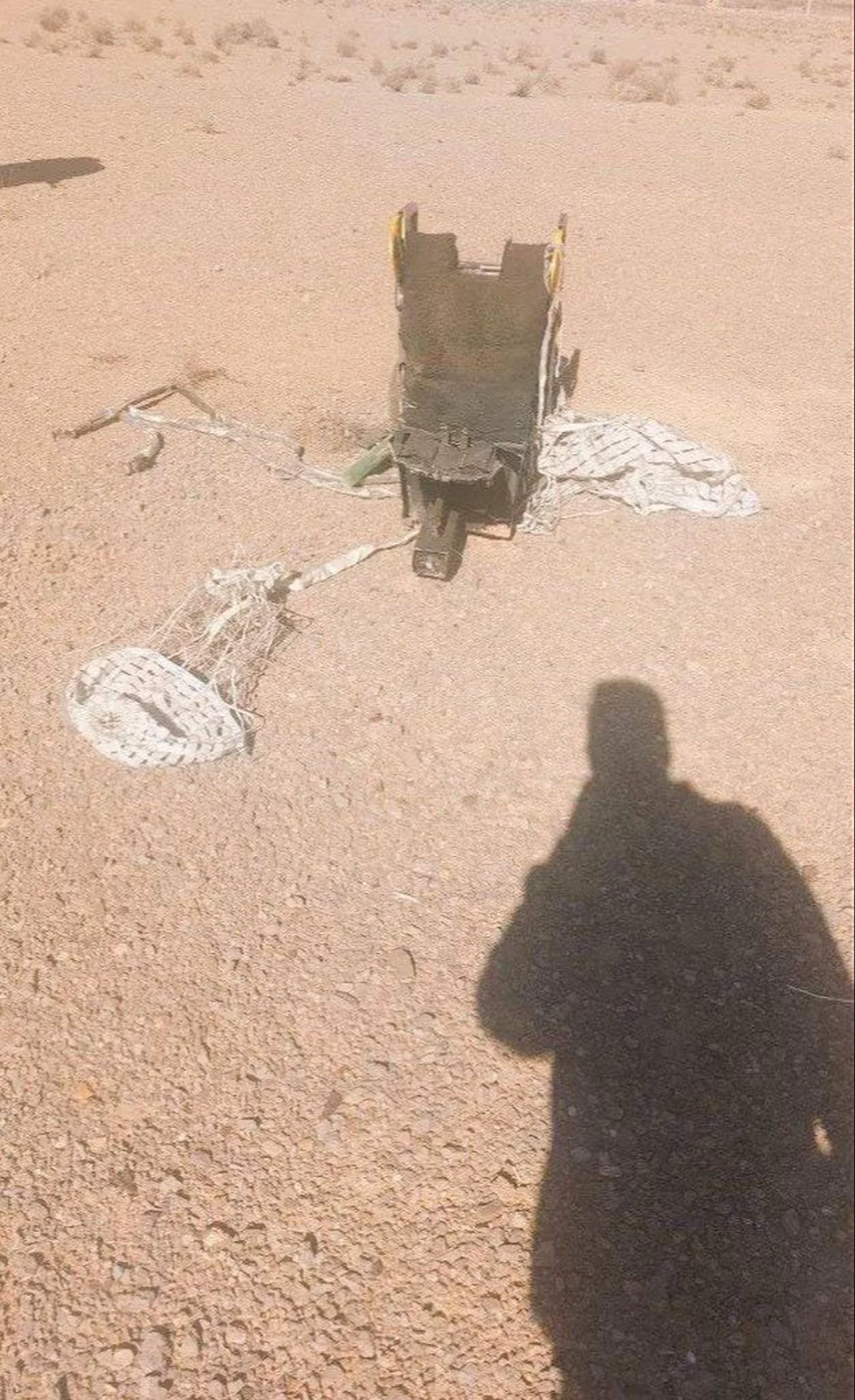
An Advanced Concept Ejection Seat II (ACES II) ejection seat system in a U.S. Air Force F-15E Strike Eagle fighter jet that crashed in Iran. (Photo via Telegram)