

kymnjoro
Elder Lister
If you are driving along the Nairobi–Nakuru highway near Lake Elmenteita, you are passing right by one of East Africa’s oldest and most dazzling Lower Paleolithic sites. Welcome to Kariandusi—the ancient hotspot where early human ancestors upgraded their toolsets using actual volcanic glass! Discovered in 1928 by the legendary paleoanthropologist Dr. Louis Leakey, this site reveals an era when survival relied entirely on mastering the raw elements of the Great Rift Valley.
The Findings:The Obsidian Treasure: While early humans typically shaped tools out of regular rock, Kariandusi is world-famous for its massive collection of Acheulean handaxes and cleavers crafted from obsidian—a sleek, dark, and shiny volcanic glass that forms from cooling lava.
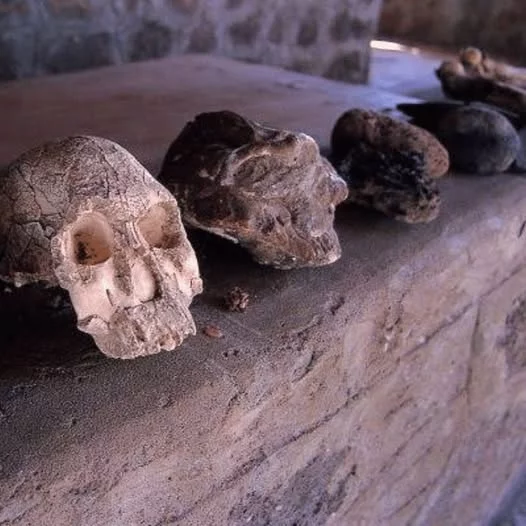
The Ancient Lakeside: Archaeologists uncovered over 2,000 distinct artifacts tightly packed into the earth. Because of the sheer abundance of pristine handaxes, Dr. Leakey believed the area served as a prehistoric manufacturing hub. Diatomite Beds: The site is also famous for its striking white, chalky layers of diatomite, which show that this arid landscape was once covered by a massive ancient lake millions of years ago. Why It Matters ating back between 700,000 and 1 million years ago, Kariandusi was occupied by Homo erectus. , Obsidian flakes down to edges that are sharper than modern surgical scalpels. By choosing this volcanic glass, our ancient ancestors weren't just creating heavy pounding tools; they were crafting incredibly sharp, efficient knives used for butchering meat and processing resources. Fascinatingly, modern handwear analysis at the site even suggests the early emergence of "handedness," proving that some of these ancient tools were custom-shaped specifically for left-handed users! Today, managed by the National Museums of Kenya, Kariandusi stands as a breathtaking monument to early human innovation
The Findings:The Obsidian Treasure: While early humans typically shaped tools out of regular rock, Kariandusi is world-famous for its massive collection of Acheulean handaxes and cleavers crafted from obsidian—a sleek, dark, and shiny volcanic glass that forms from cooling lava.
The Ancient Lakeside: Archaeologists uncovered over 2,000 distinct artifacts tightly packed into the earth. Because of the sheer abundance of pristine handaxes, Dr. Leakey believed the area served as a prehistoric manufacturing hub. Diatomite Beds: The site is also famous for its striking white, chalky layers of diatomite, which show that this arid landscape was once covered by a massive ancient lake millions of years ago. Why It Matters
ating back between 700,000 and 1 million years ago, Kariandusi was occupied by Homo erectus. , Obsidian flakes down to edges that are sharper than modern surgical scalpels. By choosing this volcanic glass, our ancient ancestors weren't just creating heavy pounding tools; they were crafting incredibly sharp, efficient knives used for butchering meat and processing resources. Fascinatingly, modern handwear analysis at the site even suggests the early emergence of "handedness," proving that some of these ancient tools were custom-shaped specifically for left-handed users! Today, managed by the National Museums of Kenya, Kariandusi stands as a breathtaking monument to early human innovation