

kymnjoro
Elder Lister
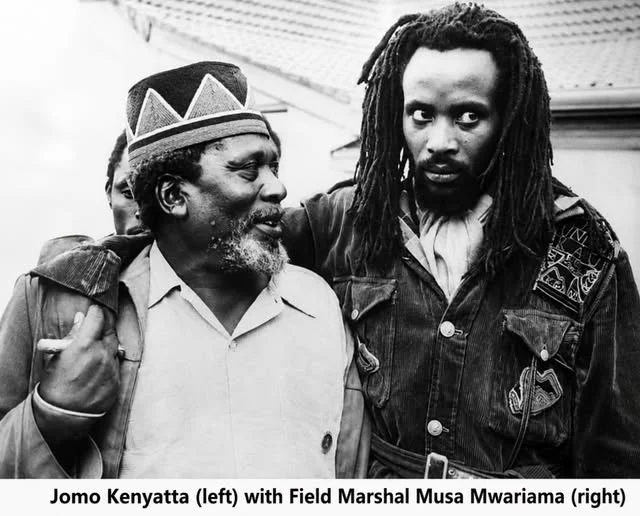
Field Marshal Musa Mwariama (aka M’Kirigua M’Muchiri): 1928-1989.
In the Kimeru language, “Mwariama”, means “One who speaks the truth”.
Mwariama was also known as “Muthigari Mugathe” or “Nkumbuku” His father was M’Muchiri Mawiri, himself a warrior-leader in his youth, and a wealthy person owing a lot of livestock by the standards of his time. Mwariama was born in 1928 in Muthara location, Tigania division, of Nyambene area, Meru district. He received the typical traditional Meru upbringing. In his youth he led an adventurous life after elementary schooling. His movements during the period 1942-1946 are difficult to trace. It is said that he frequently moved in and out of Meru, travelled extensively in Kikuyu land and worked for various employers doing some odd jobs.
In 1950, Mwariama took the Mau Mau oath and worked for three masters until 1953. He worked as a watchman of a white man Captain Morris, as a “Special
Police” for the colonial government and as chairman of the Action group for the Mau Mau and KAU operating in Naro Moru area (Nyeri district). While working as a “Special Police”he used his privileged position to transport some the collected
guns and ammunition to the Ruringu Mau Mau headquarters. This endeared him to the Mau Mau leadership, who gave him the name “Muthigari Mugathe” meaning (The Honoured Soldier).
In 1953, Mwariama killed his manager and stole several guns and a pistol. He joined the forest fighters and declared war on the colonial government, his former employer.
His name alone struck fear into the hearts of the British colonial forces. From 1953-1961, as the highest-ranking Mau Mau fighter, he led the brave Merian battalion of around 2,000 soldiers from the dense, dark forests of Nyambene in Meru. Unlike many of his comrades, Field Marshal Mwariama survived the war without ever being killed or captured—a testament to his unmatched resilience and leadership.
Following the surrender negotiations initiated by Kenyatta’s government, Mwariama led his troops to visit Kenyatta at his Gatundu home on 16th December 1963. Thereafter, he led a quiet life at his farm in Timau.
Field Marshal Mwariama died in 1989. According to widely reported accounts, he became fatally poisoned after attempting to save a friend who had been bitten by a venomous snake by sucking venom from the wound. He was buried at his home in Kiambogo, Timau, Meru County, where his grave remains a place of remembrance.
Side Note - The tree in the comments is the Majestic Mwariama tree at the Meru National Park. It served as one of his hiding places during the fight for independence.
On 8th August we will celebrate this legend at Scilla Gardens Kasarani.
In the Kimeru language, “Mwariama”, means “One who speaks the truth”.
Mwariama was also known as “Muthigari Mugathe” or “Nkumbuku” His father was M’Muchiri Mawiri, himself a warrior-leader in his youth, and a wealthy person owing a lot of livestock by the standards of his time. Mwariama was born in 1928 in Muthara location, Tigania division, of Nyambene area, Meru district. He received the typical traditional Meru upbringing. In his youth he led an adventurous life after elementary schooling. His movements during the period 1942-1946 are difficult to trace. It is said that he frequently moved in and out of Meru, travelled extensively in Kikuyu land and worked for various employers doing some odd jobs.
In 1950, Mwariama took the Mau Mau oath and worked for three masters until 1953. He worked as a watchman of a white man Captain Morris, as a “Special
Police” for the colonial government and as chairman of the Action group for the Mau Mau and KAU operating in Naro Moru area (Nyeri district). While working as a “Special Police”he used his privileged position to transport some the collected
guns and ammunition to the Ruringu Mau Mau headquarters. This endeared him to the Mau Mau leadership, who gave him the name “Muthigari Mugathe” meaning (The Honoured Soldier).
In 1953, Mwariama killed his manager and stole several guns and a pistol. He joined the forest fighters and declared war on the colonial government, his former employer.
His name alone struck fear into the hearts of the British colonial forces. From 1953-1961, as the highest-ranking Mau Mau fighter, he led the brave Merian battalion of around 2,000 soldiers from the dense, dark forests of Nyambene in Meru. Unlike many of his comrades, Field Marshal Mwariama survived the war without ever being killed or captured—a testament to his unmatched resilience and leadership.
Following the surrender negotiations initiated by Kenyatta’s government, Mwariama led his troops to visit Kenyatta at his Gatundu home on 16th December 1963. Thereafter, he led a quiet life at his farm in Timau.
Field Marshal Mwariama died in 1989. According to widely reported accounts, he became fatally poisoned after attempting to save a friend who had been bitten by a venomous snake by sucking venom from the wound. He was buried at his home in Kiambogo, Timau, Meru County, where his grave remains a place of remembrance.
Side Note - The tree in the comments is the Majestic Mwariama tree at the Meru National Park. It served as one of his hiding places during the fight for independence.
On 8th August we will celebrate this legend at Scilla Gardens Kasarani.