

kymnjoro
Elder Lister
In 1986, the U.S. government helped pay $600,000 for a Black scholar to explain Africa to American television viewers. Then the head of the federal agency that funded it watched the finished series and demanded that her agency’s name be taken off the credits.
The scholar was 53 years old, born in Kenya, and teaching at the University of Michigan. Thirteen years earlier, he had already been forced out of Uganda by dictator Idi Amin.
Now he was appearing on PBS for nine hours, telling Africa’s story through an African voice instead of leaving outsiders to explain the continent for him. The series was called The Africans: A Triple Heritage.
Before it even reached American television, the series was already drawing criticism. The chair of the National Endowment for the Humanities called it an “anti-West diatribe,” while Mazrui refused to make Africa’s history more comfortable for Western viewers.
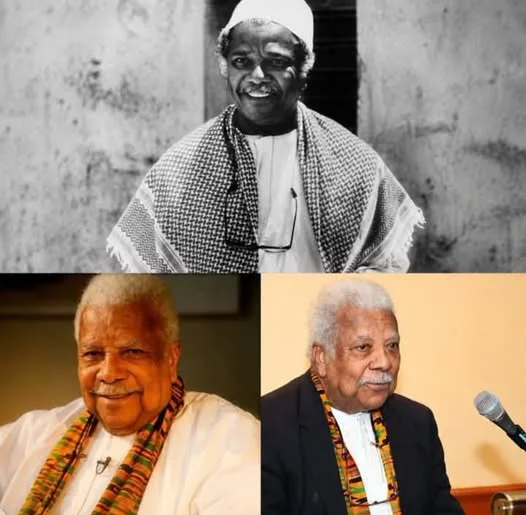
His name was Ali Mazrui. He became one of the most influential African political thinkers of his generation, writing dozens of books and spending much of his career at American universities.
He had been pushed out of one country for speaking openly and attacked in another for the way he told Africa’s story. He kept speaking anyway, and millions of people would eventually hear him.
Yet many Americans today have never heard his name. His fight over who had the right to explain Africa had begun long before PBS put his face on television.
Mazrui was born in Mombasa, Kenya, in 1933, when the country was still under British colonial rule. He grew up in a place where Africans lived under a government whose final authority sat thousands of miles away.
His education eventually carried him through Britain and the United States. He studied at Manchester University, Columbia University, and Oxford before returning to East Africa.
In 1963, the same year Kenya gained independence, Mazrui joined Makerere University College in neighboring Uganda as a political science lecturer. Across Africa, European empires were retreating, but no one agreed on what independence should look like once colonial rulers were gone.
Mazrui did not keep those arguments inside the classroom. He became known for public lectures and debates about colonialism, nationalism, political power, and the direction newly independent African countries were taking.
His career at Makerere moved quickly. He became a professor, headed political science, and became the first African Dean of the Faculty of Social Sciences.
But independence did not automatically bring freedom to criticize the people who took power afterward. Uganda would teach Mazrui that lesson in a much harsher way.
Idi Amin seized control of Uganda in 1971 and became increasingly brutal toward people he saw as enemies or critics. By 1973, Mazrui had been forced to leave the country.
He could have decided that speaking openly was too dangerous and spent the rest of his career choosing safer subjects. Instead, he took those arguments with him to the United States.
Mazrui joined the University of Michigan in 1974 as a professor of political science. From 1978 to 1981, he directed the university’s Center for Afroamerican and African Studies.
His work there helped bring African studies and African American studies into closer conversation. Michigan later credited him with strengthening that connection during his years at the university.
But a university classroom could reach only so many people. Television was about to put Mazrui in front of viewers who might never read one of his books or attend one of his lectures.
The project took four years, crossed three continents, filmed in 18 countries, and cost about $3.5 million. Mazrui stood at the center of it, not as a reporter briefly passing through Africa, but as an African scholar explaining the continent as he saw it.
He called the idea behind the series Africa’s “triple heritage.” He argued that African societies had been shaped by indigenous traditions, centuries of Islamic influence, and the enormous impact of Western contact and colonial rule.
Mazrui saw all three in his own life. He was African, Muslim, and educated in Western universities, so the argument was also personal.
The series did not treat colonialism as a small part of Africa’s problems. It dealt with slavery, European conquest, economic dependence, religion, technology, political power, and the damage left behind when outside powers drew borders and ruled people who had never asked to be ruled.
Mazrui also criticized African governments and African political failures. But he refused to talk about those failures as if Western power and colonial history had nothing to do with the world those governments inherited.
When reporters challenged his point of view, his answer was straightforward. He had been invited to look at Africa as an African.
That was where the real fight began.
The National Endowment for the Humanities had approved $600,000 for the project nearly two years before it reached American television. American taxpayers were helping finance a major television series in which an African scholar would explain Africa to a Western audience in his own voice.
Then leadership at the agency changed. Lynne Cheney became chair of the NEH in May 1986 and watched all nine hours of the finished series that August.
She strongly objected to what she saw.
Cheney accused the program of being politically slanted and called it an “anti-West diatribe.” She believed Mazrui placed too much blame on the West for Africa’s problems and objected especially to parts of the series dealing with figures such as Libyan leader Muammar Gadhafi.
The dispute was not simply about personal disagreement. The NEH argued that WETA had promised a balanced treatment of controversial subjects when it applied for federal funding and that the finished series had failed to provide that balance.
Mazrui saw the issue differently. He had not been brought in to repeat the familiar Western voice Americans had already heard explaining Africa for decades.
He had been asked to give viewers an African perspective. If the series carried a bias, he said, that bias was pro-African rather than anti-Western.
Cheney went beyond criticizing the program. She succeeded in having the NEH name removed from the credits and rejected another $50,000 WETA had requested to help promote the series.
The original $600,000 had already helped pay for the production. Now the federal agency that had funded part of it did not want its name appearing beside the finished work.
That contradiction made the argument bigger than one television series. A public agency had helped give an African scholar a national platform, then pulled its name away when it disliked what he said from that platform.
Mazrui did not apologize for making Western viewers uncomfortable. He believed they should be able to hear an African interpretation of history even when that interpretation challenged the way they had been taught to see the continent.
PBS did not bury the series.
The Africans began airing across American public television in October 1986. The nine hours that had caused so much argument reached viewers anyway.
Not everyone agreed with Mazrui, and plenty of critics said so. Some challenged the way he treated Western responsibility, African governments, economic failures, and Gadhafi, while others defended the importance of hearing Africa discussed by someone whose viewpoint did not begin in Washington, London, or Paris.
That disagreement is part of why the story still matters. Mazrui did not become important because everyone accepted his version of Africa.
He became important because people had to argue with an African intellectual speaking for himself. Viewers could reject his conclusions, question his politics, or disagree with his interpretation of history, but they first had to hear him.
The controversy did not end his career in the United States. Mazrui kept teaching, writing, speaking, and challenging governments and political ideas long after the television cameras moved on.
In 1989, he joined Binghamton University and established the Institute of Global Cultural Studies. By the end of his life, he had written or co-written more than 40 books along with hundreds of articles and book chapters.
He was never easy to place in one political camp. He criticized colonial powers and the United States, but he also criticized abuses of power by African leaders and governments across the developing world.
That habit of challenging more than one side stayed with him for decades. It was the same instinct that had made speaking openly dangerous in Uganda and controversial on American television.
Ali Mazrui died at his home in Vestal, New York, on October 12, 2014. He was 81 years old, more than forty years removed from the time he had been forced out of Uganda.
By then, the television series that caused such anger in Washington had traveled far beyond its first American broadcast. It was shown internationally, translated into other languages, used in classrooms, and watched by millions of people around the world.
That makes the fight over the credits in 1986 feel different today. The National Endowment for the Humanities succeeded in removing its name from The Africans, but Ali Mazrui’s name remained attached to every episode.
They could remove the agency from the credits. They could not remove the African voice at the center of the screen.
The scholar was 53 years old, born in Kenya, and teaching at the University of Michigan. Thirteen years earlier, he had already been forced out of Uganda by dictator Idi Amin.
Now he was appearing on PBS for nine hours, telling Africa’s story through an African voice instead of leaving outsiders to explain the continent for him. The series was called The Africans: A Triple Heritage.
Before it even reached American television, the series was already drawing criticism. The chair of the National Endowment for the Humanities called it an “anti-West diatribe,” while Mazrui refused to make Africa’s history more comfortable for Western viewers.
His name was Ali Mazrui. He became one of the most influential African political thinkers of his generation, writing dozens of books and spending much of his career at American universities.
He had been pushed out of one country for speaking openly and attacked in another for the way he told Africa’s story. He kept speaking anyway, and millions of people would eventually hear him.
Yet many Americans today have never heard his name. His fight over who had the right to explain Africa had begun long before PBS put his face on television.
Mazrui was born in Mombasa, Kenya, in 1933, when the country was still under British colonial rule. He grew up in a place where Africans lived under a government whose final authority sat thousands of miles away.
His education eventually carried him through Britain and the United States. He studied at Manchester University, Columbia University, and Oxford before returning to East Africa.
In 1963, the same year Kenya gained independence, Mazrui joined Makerere University College in neighboring Uganda as a political science lecturer. Across Africa, European empires were retreating, but no one agreed on what independence should look like once colonial rulers were gone.
Mazrui did not keep those arguments inside the classroom. He became known for public lectures and debates about colonialism, nationalism, political power, and the direction newly independent African countries were taking.
His career at Makerere moved quickly. He became a professor, headed political science, and became the first African Dean of the Faculty of Social Sciences.
But independence did not automatically bring freedom to criticize the people who took power afterward. Uganda would teach Mazrui that lesson in a much harsher way.
Idi Amin seized control of Uganda in 1971 and became increasingly brutal toward people he saw as enemies or critics. By 1973, Mazrui had been forced to leave the country.
He could have decided that speaking openly was too dangerous and spent the rest of his career choosing safer subjects. Instead, he took those arguments with him to the United States.
Mazrui joined the University of Michigan in 1974 as a professor of political science. From 1978 to 1981, he directed the university’s Center for Afroamerican and African Studies.
His work there helped bring African studies and African American studies into closer conversation. Michigan later credited him with strengthening that connection during his years at the university.
But a university classroom could reach only so many people. Television was about to put Mazrui in front of viewers who might never read one of his books or attend one of his lectures.
The project took four years, crossed three continents, filmed in 18 countries, and cost about $3.5 million. Mazrui stood at the center of it, not as a reporter briefly passing through Africa, but as an African scholar explaining the continent as he saw it.
He called the idea behind the series Africa’s “triple heritage.” He argued that African societies had been shaped by indigenous traditions, centuries of Islamic influence, and the enormous impact of Western contact and colonial rule.
Mazrui saw all three in his own life. He was African, Muslim, and educated in Western universities, so the argument was also personal.
The series did not treat colonialism as a small part of Africa’s problems. It dealt with slavery, European conquest, economic dependence, religion, technology, political power, and the damage left behind when outside powers drew borders and ruled people who had never asked to be ruled.
Mazrui also criticized African governments and African political failures. But he refused to talk about those failures as if Western power and colonial history had nothing to do with the world those governments inherited.
When reporters challenged his point of view, his answer was straightforward. He had been invited to look at Africa as an African.
That was where the real fight began.
The National Endowment for the Humanities had approved $600,000 for the project nearly two years before it reached American television. American taxpayers were helping finance a major television series in which an African scholar would explain Africa to a Western audience in his own voice.
Then leadership at the agency changed. Lynne Cheney became chair of the NEH in May 1986 and watched all nine hours of the finished series that August.
She strongly objected to what she saw.
Cheney accused the program of being politically slanted and called it an “anti-West diatribe.” She believed Mazrui placed too much blame on the West for Africa’s problems and objected especially to parts of the series dealing with figures such as Libyan leader Muammar Gadhafi.
The dispute was not simply about personal disagreement. The NEH argued that WETA had promised a balanced treatment of controversial subjects when it applied for federal funding and that the finished series had failed to provide that balance.
Mazrui saw the issue differently. He had not been brought in to repeat the familiar Western voice Americans had already heard explaining Africa for decades.
He had been asked to give viewers an African perspective. If the series carried a bias, he said, that bias was pro-African rather than anti-Western.
Cheney went beyond criticizing the program. She succeeded in having the NEH name removed from the credits and rejected another $50,000 WETA had requested to help promote the series.
The original $600,000 had already helped pay for the production. Now the federal agency that had funded part of it did not want its name appearing beside the finished work.
That contradiction made the argument bigger than one television series. A public agency had helped give an African scholar a national platform, then pulled its name away when it disliked what he said from that platform.
Mazrui did not apologize for making Western viewers uncomfortable. He believed they should be able to hear an African interpretation of history even when that interpretation challenged the way they had been taught to see the continent.
PBS did not bury the series.
The Africans began airing across American public television in October 1986. The nine hours that had caused so much argument reached viewers anyway.
Not everyone agreed with Mazrui, and plenty of critics said so. Some challenged the way he treated Western responsibility, African governments, economic failures, and Gadhafi, while others defended the importance of hearing Africa discussed by someone whose viewpoint did not begin in Washington, London, or Paris.
That disagreement is part of why the story still matters. Mazrui did not become important because everyone accepted his version of Africa.
He became important because people had to argue with an African intellectual speaking for himself. Viewers could reject his conclusions, question his politics, or disagree with his interpretation of history, but they first had to hear him.
The controversy did not end his career in the United States. Mazrui kept teaching, writing, speaking, and challenging governments and political ideas long after the television cameras moved on.
In 1989, he joined Binghamton University and established the Institute of Global Cultural Studies. By the end of his life, he had written or co-written more than 40 books along with hundreds of articles and book chapters.
He was never easy to place in one political camp. He criticized colonial powers and the United States, but he also criticized abuses of power by African leaders and governments across the developing world.
That habit of challenging more than one side stayed with him for decades. It was the same instinct that had made speaking openly dangerous in Uganda and controversial on American television.
Ali Mazrui died at his home in Vestal, New York, on October 12, 2014. He was 81 years old, more than forty years removed from the time he had been forced out of Uganda.
By then, the television series that caused such anger in Washington had traveled far beyond its first American broadcast. It was shown internationally, translated into other languages, used in classrooms, and watched by millions of people around the world.
That makes the fight over the credits in 1986 feel different today. The National Endowment for the Humanities succeeded in removing its name from The Africans, but Ali Mazrui’s name remained attached to every episode.
They could remove the agency from the credits. They could not remove the African voice at the center of the screen.
