

wakimani
Elder Lister
Kenya was still a colony of Britain when Nanyuki was declared a Township. Before that, it was a remote settlement district comprising of about half a million acres of land - most of which had been left behind by the Maasais in 1911. While some say that the Maasais moved out voluntarily after signing the Second Maasai Treaty, others claim that they were forcefully migrated. So controversial was the issue that the then Governor of the Colony of Kenya, Percy Girouard, had to resign.
In 1919, there was an official attempt to increase the white population in Kenya by providing cheap land to ex-servicemen and women who had fought in World War 1 (1914 - 1918). It was known as the Soldier Settlement Scheme. But the scheme was not as successful as it had been envisioned because only a few ex-soldiers settled in Kenya. By 1921, Nanyuki had only seventy-three such landowners. 73 settlers, half a million acres of land.
And they were wealthy individuals because one requirement of the Soldier Settlement Scheme was that a beneficiary must have had a capital of at least £1,000.
This locked out the lower ranks of the military since they could not afford the amount. In his article, Christopher Youe says that any newspaper reporting of activities in Nanyuki in the 1920s read like an Army List as the Brigadier Generals, Colonels, Majors and Captains were counted.
These rich Nanyuki settlers dominated the Nanyuki Farmers Association, local economy, local social life, and for purposes of this article, local politics.
By 1928, this remote settlement district called Nanyuki was slowly getting developed and the town had about a hundred and fifty settlers, predominantly European landowners.
These were soldiers who had fought in the First World War and needed somewhere calm to enjoy their military pensions in peace while trying to farm so as to supplement their earnings. Very few of them had experience in agriculture and this led to financial losses. But they kept trying.
Even so, Nanyuki was still being administrated from Nyeri where the local District Commissioner was based. Nanyuki also shared a Legislative Council member with Nyeri and Laikipia. Legco is today's equivalent of Parliament so what this means is that Nanyuki, Nyeri and Laikipia had one 'MP'.
Nanyuki also had a population of landless Afrikaners who ran the transportation sector, poached game and did basically nothing else. For being poor squatters, they were despised by white Nanyuki.
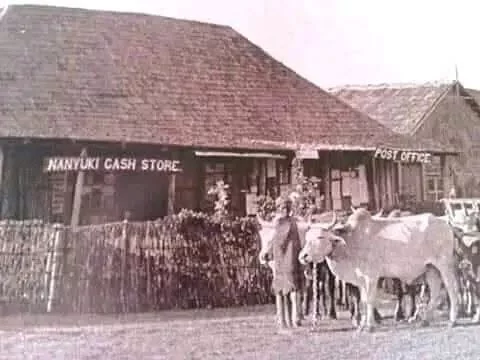
Nanyuki Township was (and still is) the center of politics and social life. The political voice for the town was the Nanyuki Farmers Association which spoke loudly on virtually every subject. It also nominated individuals to sit in the District Committee and Road Board that advised the Nyeri-based District Commissioner. They also sent a delegate to the Convention of Associations which was the unofficial Parliament for settlers. Mostly they sent Major Lionel Gascoigne who owned the very first building in Nanyuki that housed the cash store and post office.
In 1919, there was an official attempt to increase the white population in Kenya by providing cheap land to ex-servicemen and women who had fought in World War 1 (1914 - 1918). It was known as the Soldier Settlement Scheme. But the scheme was not as successful as it had been envisioned because only a few ex-soldiers settled in Kenya. By 1921, Nanyuki had only seventy-three such landowners. 73 settlers, half a million acres of land.
And they were wealthy individuals because one requirement of the Soldier Settlement Scheme was that a beneficiary must have had a capital of at least £1,000.
This locked out the lower ranks of the military since they could not afford the amount. In his article, Christopher Youe says that any newspaper reporting of activities in Nanyuki in the 1920s read like an Army List as the Brigadier Generals, Colonels, Majors and Captains were counted.
These rich Nanyuki settlers dominated the Nanyuki Farmers Association, local economy, local social life, and for purposes of this article, local politics.
By 1928, this remote settlement district called Nanyuki was slowly getting developed and the town had about a hundred and fifty settlers, predominantly European landowners.
These were soldiers who had fought in the First World War and needed somewhere calm to enjoy their military pensions in peace while trying to farm so as to supplement their earnings. Very few of them had experience in agriculture and this led to financial losses. But they kept trying.
Even so, Nanyuki was still being administrated from Nyeri where the local District Commissioner was based. Nanyuki also shared a Legislative Council member with Nyeri and Laikipia. Legco is today's equivalent of Parliament so what this means is that Nanyuki, Nyeri and Laikipia had one 'MP'.
Nanyuki also had a population of landless Afrikaners who ran the transportation sector, poached game and did basically nothing else. For being poor squatters, they were despised by white Nanyuki.
Nanyuki Township was (and still is) the center of politics and social life. The political voice for the town was the Nanyuki Farmers Association which spoke loudly on virtually every subject. It also nominated individuals to sit in the District Committee and Road Board that advised the Nyeri-based District Commissioner. They also sent a delegate to the Convention of Associations which was the unofficial Parliament for settlers. Mostly they sent Major Lionel Gascoigne who owned the very first building in Nanyuki that housed the cash store and post office.