
Tommy Kwesule.
Elder Lister
Historic neighborhoods are being razed to make way for high rises, and the government doesn’t have a plan for relocating evicted residents.
Takeaways
Overnight, Peter Shiundu went from living in the room he’d rented in one of Nairobi’s most historic suburbs to being homeless. He now relies on a makeshift shack consisting of corrugated-iron sheets that have been lashed together for shelter.
The 40-year-old, who depends on intermittent work, is one of thousands of Kenyans forced out of their homes by government bulldozers. It’s a consequence of President William Ruto’s drive to remake the country’s cities by razing low-rise neighborhoods to build multi-level affordable housing.

Peter Shiundu, who was renting a room in Old Makongeni Estate, lost his home overnight last November. Photographer: KC Cheng/Bloomberg
While the government has not said how many people the demolitions have pushed out of their homes, Kenya’s Daily Nation in January reported that 5,000 families had been evicted in Nairobi’s Mariguini slum to make way for a new build under the so-called Affordable Housing Programme.
Authorities are promoting the initiative as the biggest attempt since independence in 1963 to ease the East African nation’s accommodation deficit. But they haven’t made interim housing arrangements for those displaced and there’s no guarantee that they will end up in the new housing units that are being sold, sparking protests in some instances.
At the same time, Kenyans across the board are angered by the imposition of an additional tax in 2024 to pay for it.
“As tenants here, we have been left hanging. Only those who owned the houses received some payout,” Shiundu said as he stood amid the rubble, which is what remains of the more than century-old Makongeni Estate where he lived until November. “We are not even sure the people who were living here will be the ones who will move into the new houses.”
Ruto’s program aims to build 200,000 housing units a year across the country. The housing ministry said in a response to queries that it will create 1 million jobs, carry out public-participation exercises ahead of demolitions and that it is currently constructing 273,000 units.
Before the bulldozers rolled in, people registered as owners were given 150,000 Kenyan shillings ($1,160) in compensation. Renters like Shiundu got nothing. Neither group was given any place to stay following the demolition.
There’s no doubt that the program, officially started in 2017 but having gained in scale and urgency under Ruto’s presidency since 2022, is an attempt to meet a genuine need, a demand for 250,000 apartments or houses a year compared with construction of a tiny fraction of that.
But the manner in which the program is being carried out is raising concerns for ordinary citizens, politicians and civil society.
When newly built units were handed over in the Mukuru estate last year, local residents — who had lost their housing in the area to make way for the development — rioted as outsiders moved into accommodation they had bought.
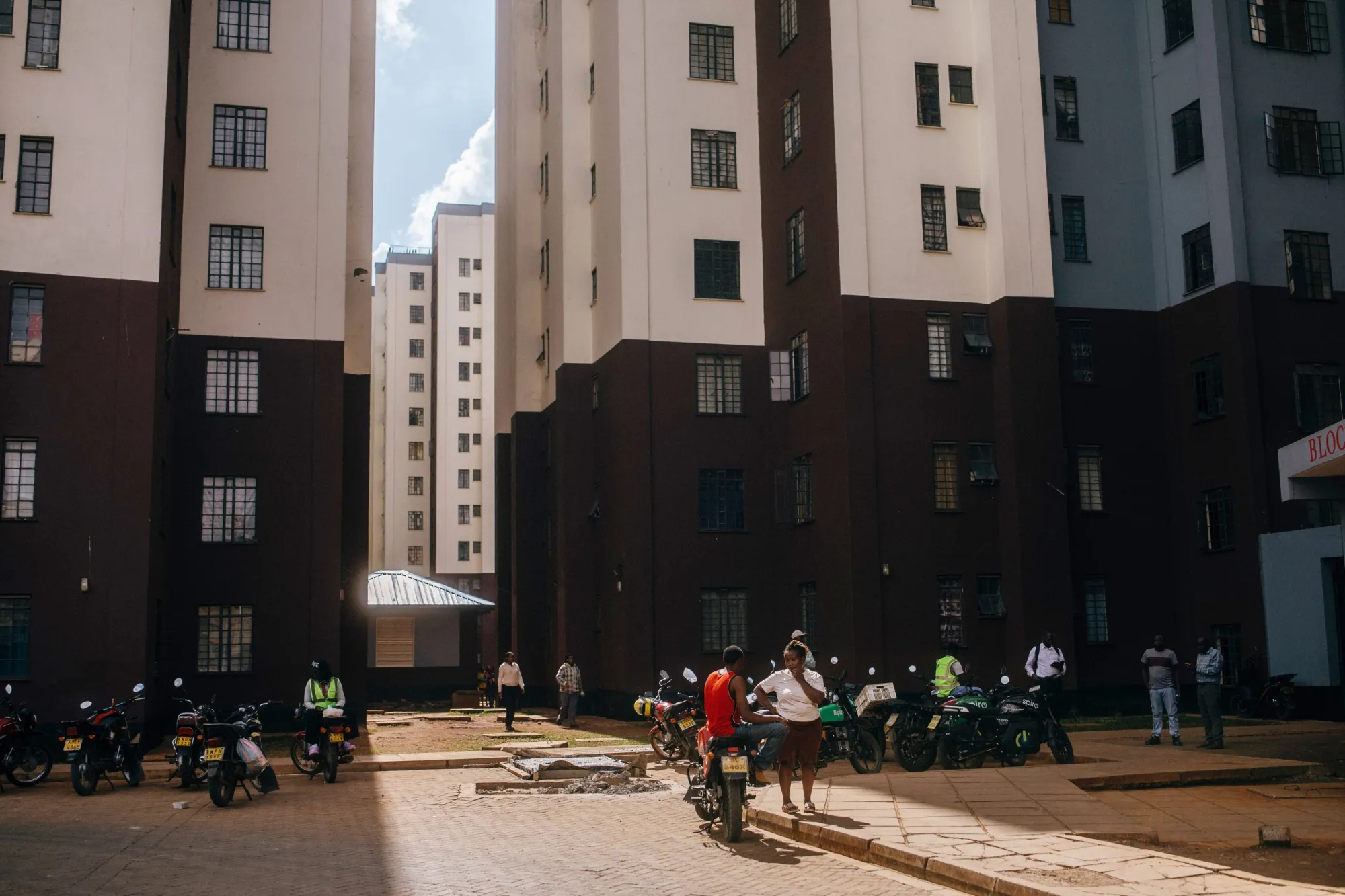
Newly built units in Mukuru, a collection of slums in Nairobi, which were developed as part of the Affordable Housing Programme. Photographer: KC Cheng/Bloomberg
More than 60 individuals, human-rights groups and opposition senators who want the tax returned banded together in a court case to challenge the program. They call the initiative unconstitutional and say it has forced people out of their homes built on public land.
“Nairobi’s population has grown dramatically and this has led to very high demand for housing,” said Henry Ochieng, chief executive officer of the Kenya Alliance of Resident Associations, which advocates on behalf of those affected but is not part of the case.
Because of the need to now crowd more people into the same space, old estates — which have many single-story lodgings — are not meeting that need, Ochieng said.
“The conversation should be on how it is done — human rights must be upheld at all times,” he said. “The authorities must protect the dignity, rights, and welfare of affected residents through consultation, compensation, and resettlement.”
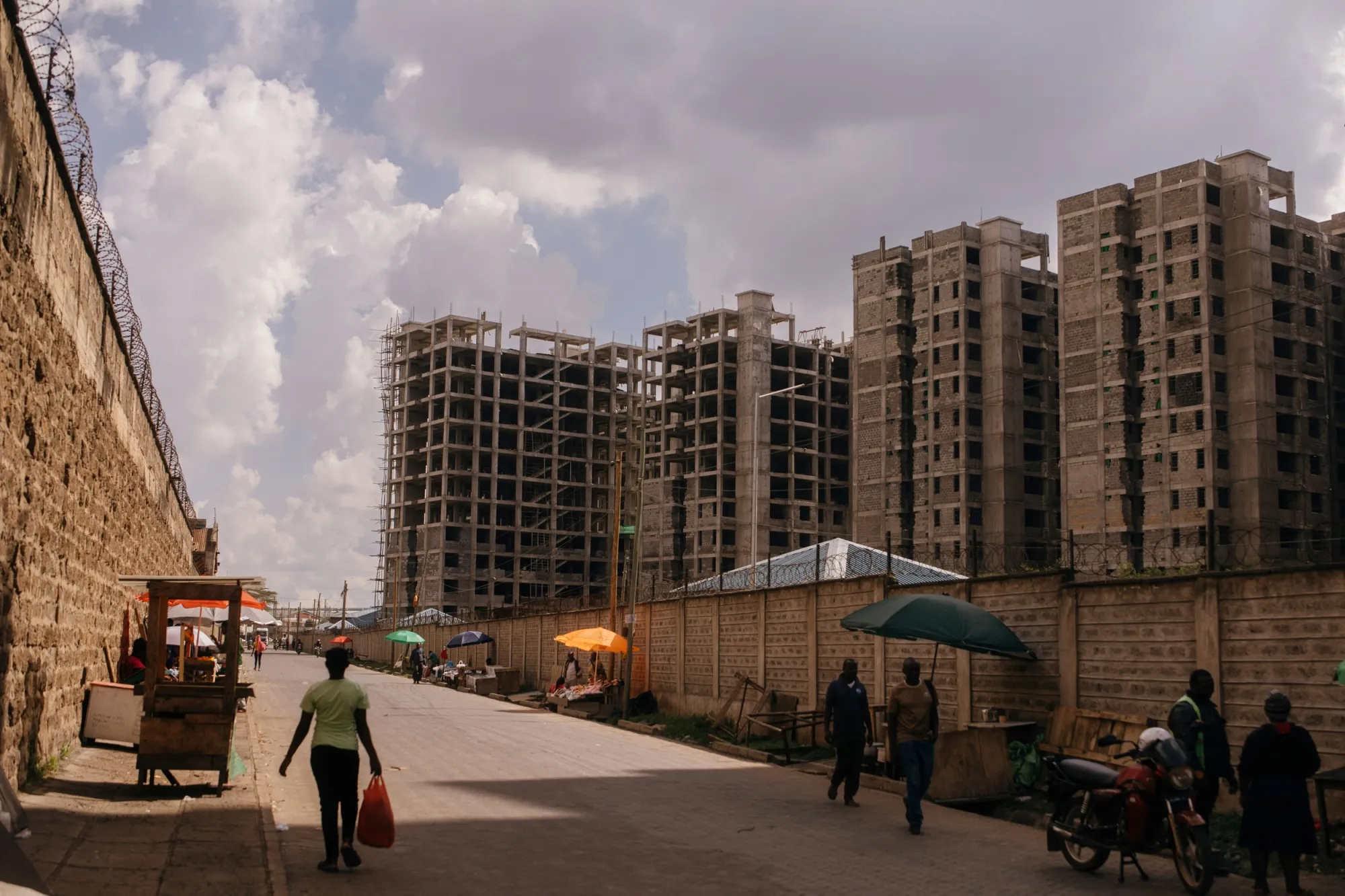
Construction is ongoing at the estate that will have over 13,000 homes. Photographer: KC Cheng/Bloomberg
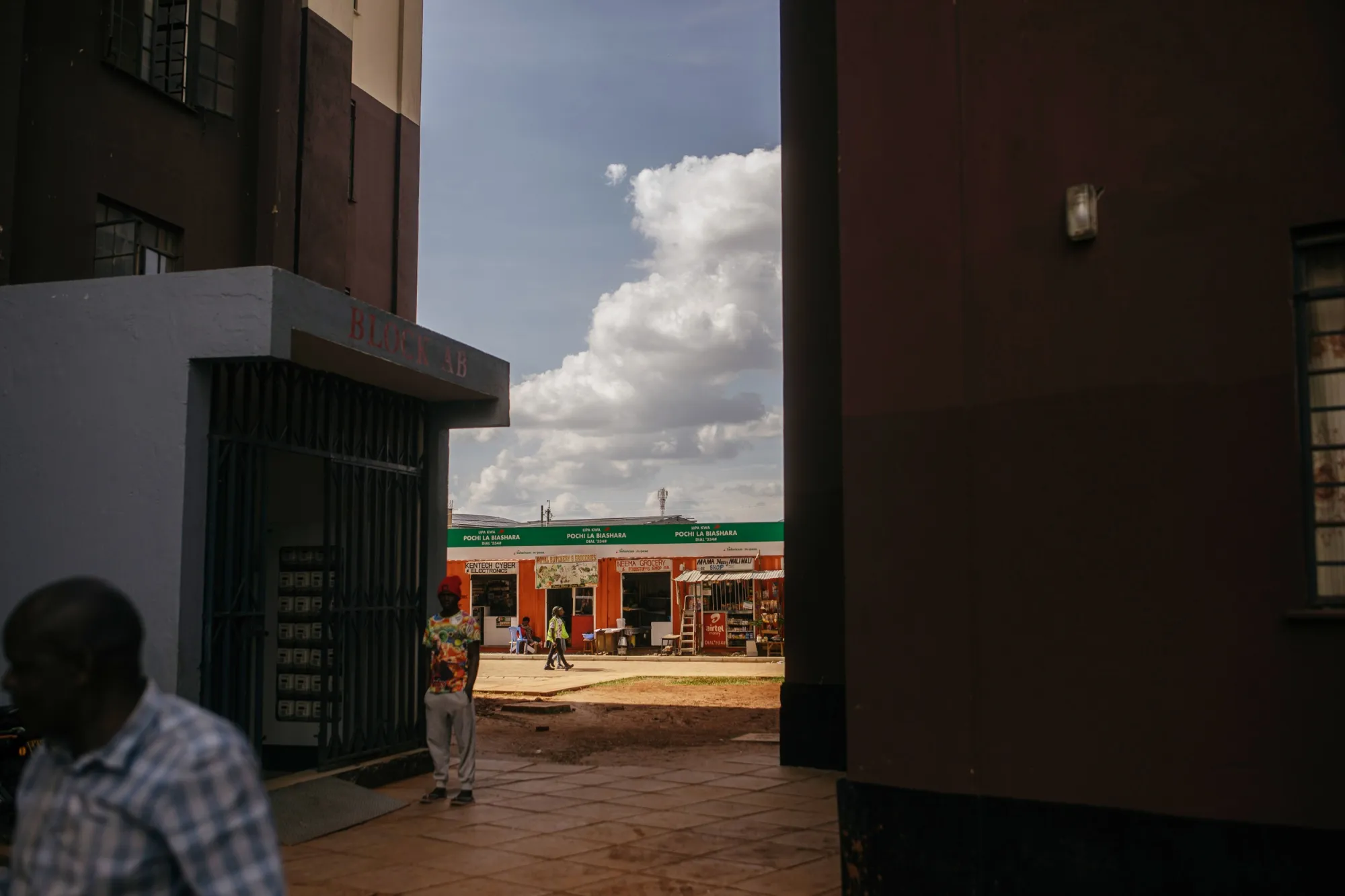
Shops inside the new Mukuru Housing Estate. Photographer: KC Cheng/Bloomberg
Prices of the Mukuru units, which come in different sizes, are tailored to earnings, with bed-sits being sold for as little as the equivalent of $5,000, or payments of $30 a month. That’s less than a third of the cost of nearby alternatives. Buyers are only allowed to purchase one property each.
Some of the new residents extol the security and availability of piped water and other services at the new estates.
“The environment here is peaceful,” said 29-year-old Miriam Nabililo, who moved from a slum to an apartment in Mukuru in August.

Resident and store owner Miriam Nabililo. Photographer: KC Cheng/Bloomberg
Still, critics say the lack of transparency in the program and on the levy used to pay for it is fueling anger. A 1.5% charge on income tax matched by employers raised the equivalent of about $563 million in the year to June 2025.
Together with large increases in health and social-security deductions, it in part triggered protests in June 2024 in which 60 people died.
“People are opposing it because they don’t know where this money is going,” said Christine Muchiri, chair of the Town Planners Chapter at the Architectural Association of Kenya. She also said that the private developers hired by the government to build the complexes are building too great a proportion of more expensive units, leaving many Kenyans without the ability to buy them.
“There are people who are being misled,” Charles Hinga, the principal secretary in the state housing department, said in a televised interview late last year, dismissing the concerns. “The silent majority are buying,” he said, a reference to what he said was strong public demand for the new units.
The program is also erasing the city’s history.
“Nairobi risks losing living historical environments that tell the story of how the city developed and how workers lived,” said Ochieng. “These neighborhoods often carry memories of trade unions, early civil-service communities and post-independence urban growth.”
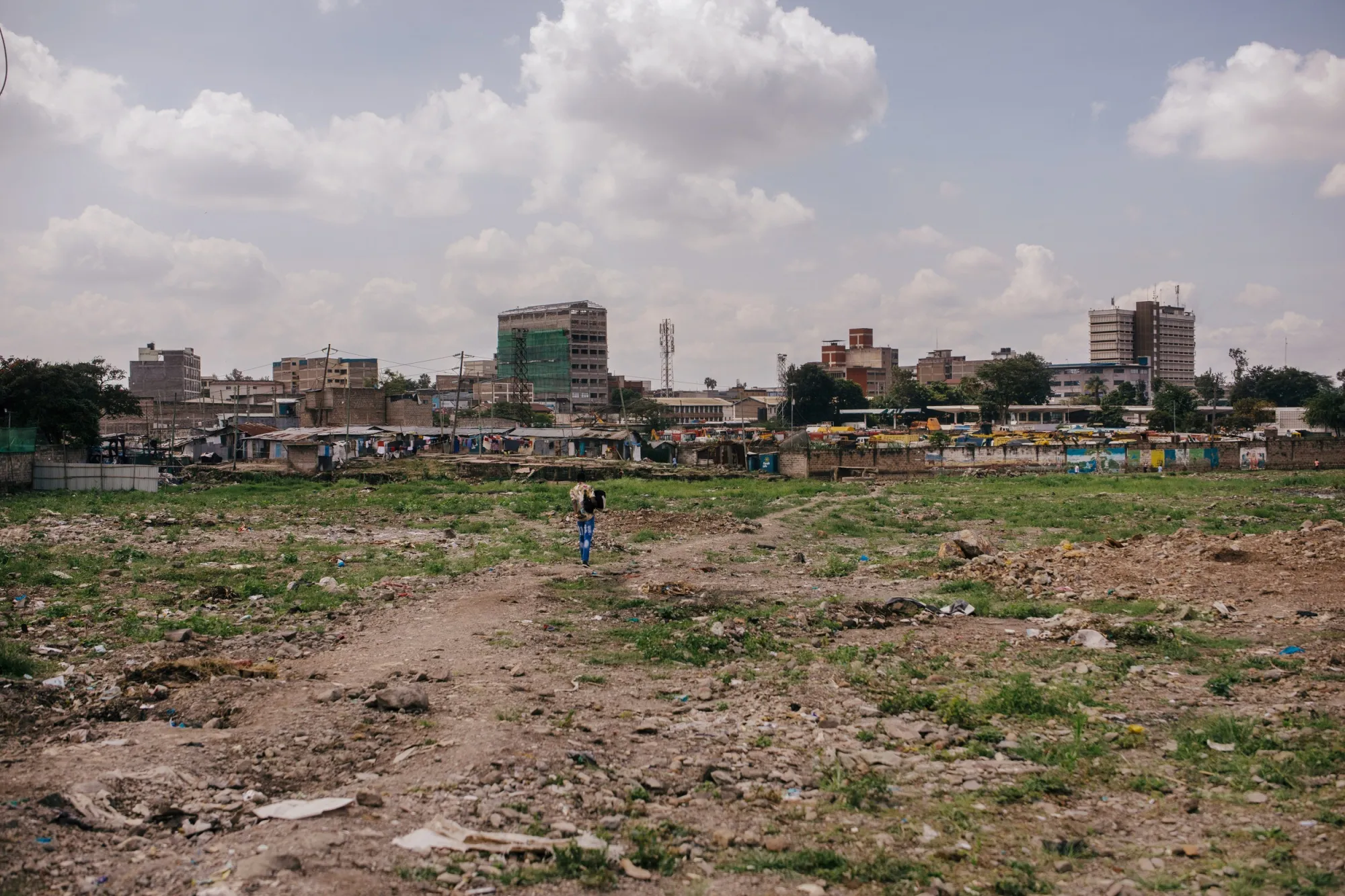
The fenced off grounds in Mariguini slum, in Nairobi’s South B neighborhood, which have seen demolitions and evictions. Photographer: KC Cheng/Bloomberg
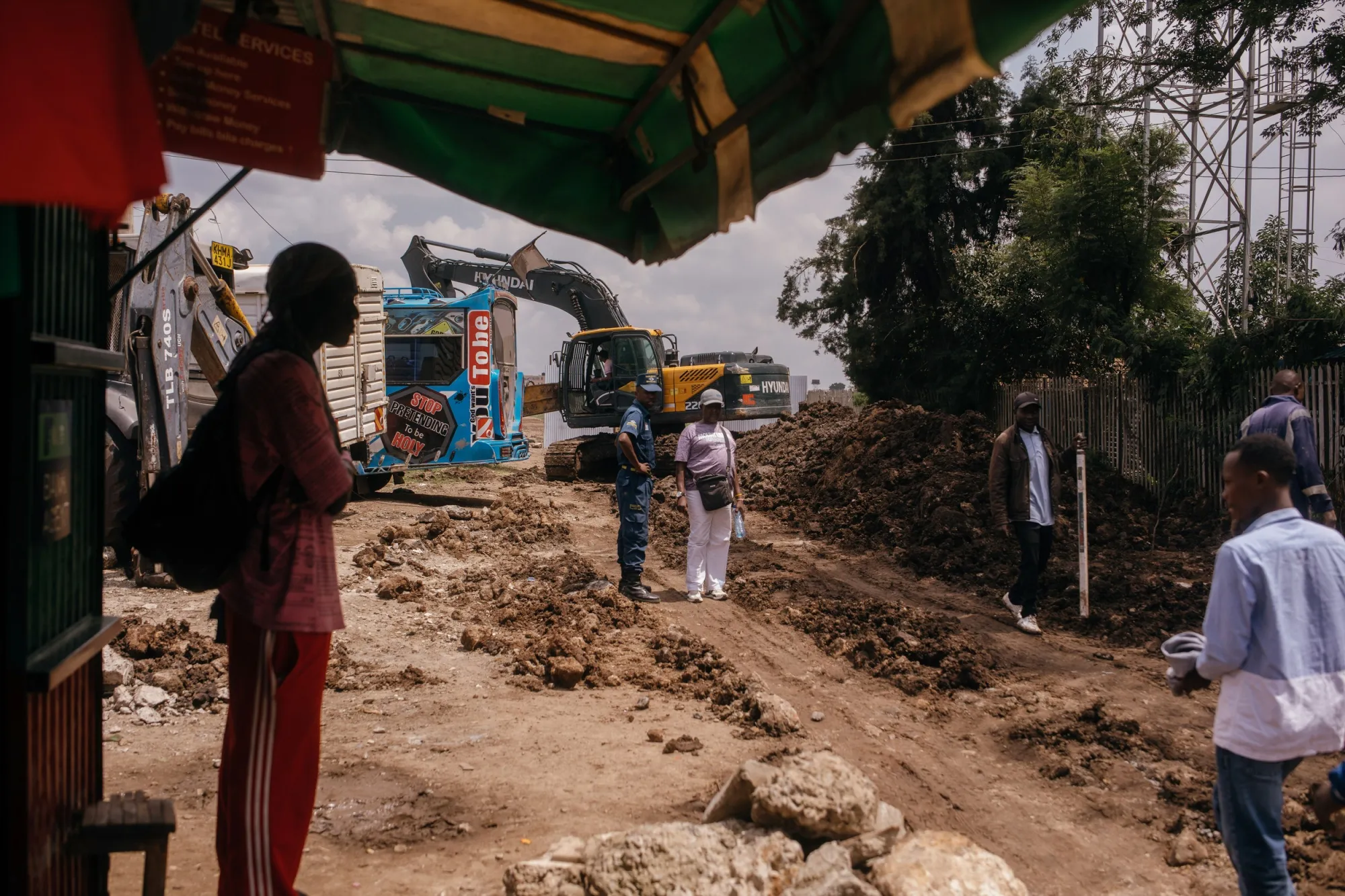
Ongoing work outside the demolished grounds of Old Makongeni Estate. Photographer: KC Cheng/Bloomberg
Nairobi is not the only African capital to have seen historical neighborhoods torn down as the clamor for affordable housing rises.
In Dakar, Senegalese authorities demolished the landmark Sandaga market in 2021 and a colonial-era maternity ward at Le Dantec hospital a year later. Some protected buildings have been declassified and knocked down to make way for new developments built by both state and private developers.
Mid-century housing is vanishing — including the city’s distinctive 1950s “bubble homes,” built to ease a post-war housing shortage by spraying concrete over an inflated mold. They’ve made way for high rises.
Vendors relocated to make way for the market demolition have protested that their incomes have dropped as there are fewer customers and a new market is yet to be completed.
Earlier, in Accra, Ghana, century-old British colonial houses were bought and then demolished by developers to make way for apartment blocks to boost rental income.
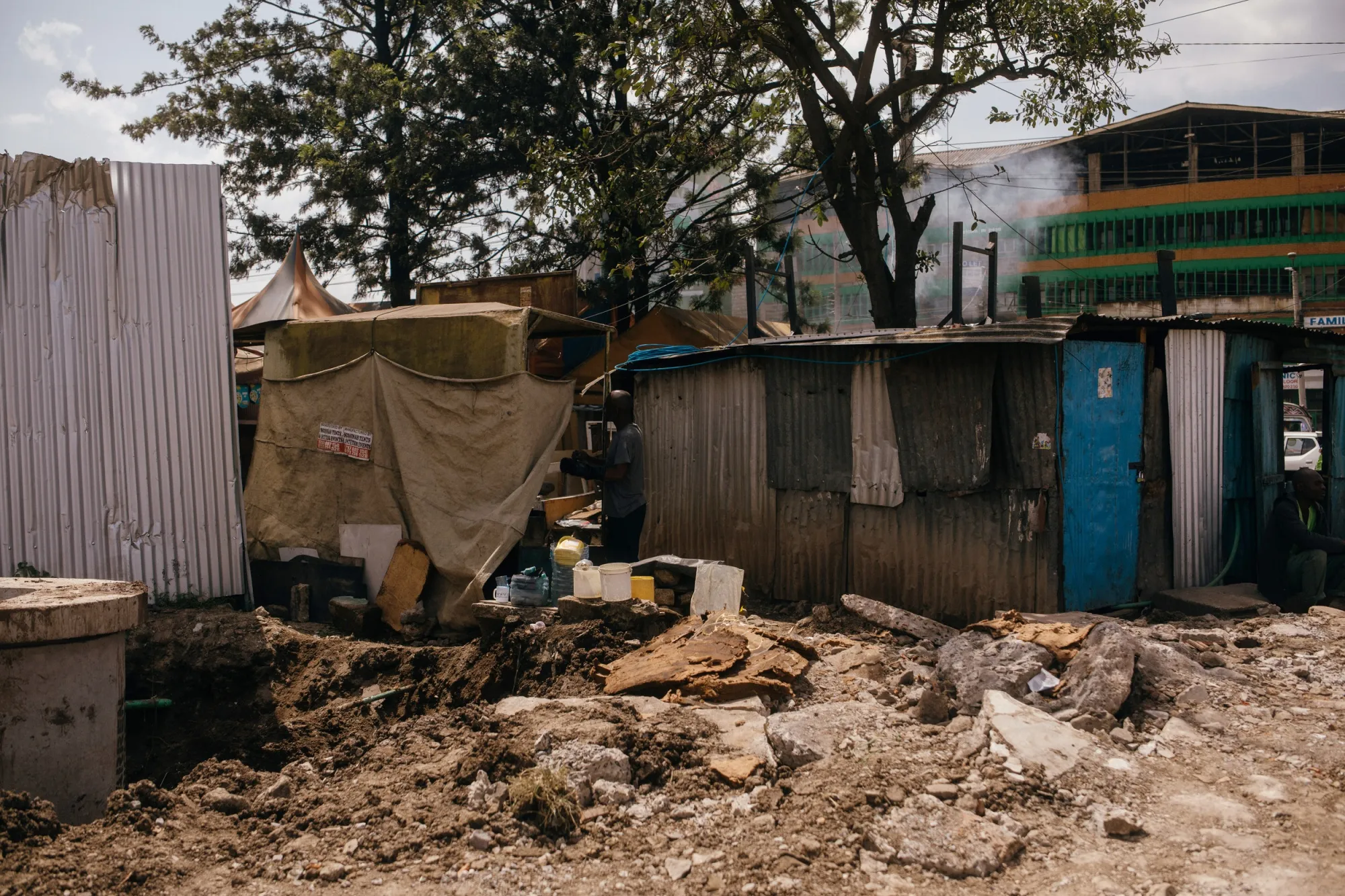
Shacks and temporary dwellings outside the Old Makongeni Estate, one of Nairobi’s most historic suburbs. Photographer: KC Cheng/Bloomberg
But the biggest obstacle to Ruto winning over support for his program is the injustice many of his citizens feel because they believe they are paying for something that they will either not benefit from, or if they do purchase the properties, will effectively be paying twice — once with their taxes and then with their own money.
“This is public land, the houses are being constructed using our taxes and eventually the houses are still sold to us,” Shiundu said.
https://www.bloomberg.com/news/features/2026-06-01/kenya-s-affordable-housing-drive-is-leaving-people-in-nairobi-homeless?taid=6a1d6b88ba61b20001692a67&utm_campaign=trueanthem&utm_content=business&utm_medium=social&utm_source=twitter
Takeaways
- Peter Shiundu, a 40-year-old, was forced out of his home by government bulldozers as part of President William Ruto's drive to remake the country's cities.
- The government's Affordable Housing Programme aims to build housing units, but authorities haven't made interim housing arrangements for those displaced and there's no guarantee they will end up in the new housing units.
- Critics say the program is being carried out in a manner that raises concerns, with people being forced out of their homes without compensation or a place to stay, and a lack of transparency in the program and the levy used to pay for it.
Overnight, Peter Shiundu went from living in the room he’d rented in one of Nairobi’s most historic suburbs to being homeless. He now relies on a makeshift shack consisting of corrugated-iron sheets that have been lashed together for shelter.
The 40-year-old, who depends on intermittent work, is one of thousands of Kenyans forced out of their homes by government bulldozers. It’s a consequence of President William Ruto’s drive to remake the country’s cities by razing low-rise neighborhoods to build multi-level affordable housing.
Peter Shiundu, who was renting a room in Old Makongeni Estate, lost his home overnight last November. Photographer: KC Cheng/Bloomberg
While the government has not said how many people the demolitions have pushed out of their homes, Kenya’s Daily Nation in January reported that 5,000 families had been evicted in Nairobi’s Mariguini slum to make way for a new build under the so-called Affordable Housing Programme.
Authorities are promoting the initiative as the biggest attempt since independence in 1963 to ease the East African nation’s accommodation deficit. But they haven’t made interim housing arrangements for those displaced and there’s no guarantee that they will end up in the new housing units that are being sold, sparking protests in some instances.
At the same time, Kenyans across the board are angered by the imposition of an additional tax in 2024 to pay for it.
“As tenants here, we have been left hanging. Only those who owned the houses received some payout,” Shiundu said as he stood amid the rubble, which is what remains of the more than century-old Makongeni Estate where he lived until November. “We are not even sure the people who were living here will be the ones who will move into the new houses.”
Ruto’s program aims to build 200,000 housing units a year across the country. The housing ministry said in a response to queries that it will create 1 million jobs, carry out public-participation exercises ahead of demolitions and that it is currently constructing 273,000 units.
Before the bulldozers rolled in, people registered as owners were given 150,000 Kenyan shillings ($1,160) in compensation. Renters like Shiundu got nothing. Neither group was given any place to stay following the demolition.
There’s no doubt that the program, officially started in 2017 but having gained in scale and urgency under Ruto’s presidency since 2022, is an attempt to meet a genuine need, a demand for 250,000 apartments or houses a year compared with construction of a tiny fraction of that.
But the manner in which the program is being carried out is raising concerns for ordinary citizens, politicians and civil society.
When newly built units were handed over in the Mukuru estate last year, local residents — who had lost their housing in the area to make way for the development — rioted as outsiders moved into accommodation they had bought.
Newly built units in Mukuru, a collection of slums in Nairobi, which were developed as part of the Affordable Housing Programme. Photographer: KC Cheng/Bloomberg
More than 60 individuals, human-rights groups and opposition senators who want the tax returned banded together in a court case to challenge the program. They call the initiative unconstitutional and say it has forced people out of their homes built on public land.
“Nairobi’s population has grown dramatically and this has led to very high demand for housing,” said Henry Ochieng, chief executive officer of the Kenya Alliance of Resident Associations, which advocates on behalf of those affected but is not part of the case.
Because of the need to now crowd more people into the same space, old estates — which have many single-story lodgings — are not meeting that need, Ochieng said.
“The conversation should be on how it is done — human rights must be upheld at all times,” he said. “The authorities must protect the dignity, rights, and welfare of affected residents through consultation, compensation, and resettlement.”
Construction is ongoing at the estate that will have over 13,000 homes. Photographer: KC Cheng/Bloomberg
Shops inside the new Mukuru Housing Estate. Photographer: KC Cheng/Bloomberg
Prices of the Mukuru units, which come in different sizes, are tailored to earnings, with bed-sits being sold for as little as the equivalent of $5,000, or payments of $30 a month. That’s less than a third of the cost of nearby alternatives. Buyers are only allowed to purchase one property each.
Some of the new residents extol the security and availability of piped water and other services at the new estates.
“The environment here is peaceful,” said 29-year-old Miriam Nabililo, who moved from a slum to an apartment in Mukuru in August.
Resident and store owner Miriam Nabililo. Photographer: KC Cheng/Bloomberg
Still, critics say the lack of transparency in the program and on the levy used to pay for it is fueling anger. A 1.5% charge on income tax matched by employers raised the equivalent of about $563 million in the year to June 2025.
Together with large increases in health and social-security deductions, it in part triggered protests in June 2024 in which 60 people died.
“People are opposing it because they don’t know where this money is going,” said Christine Muchiri, chair of the Town Planners Chapter at the Architectural Association of Kenya. She also said that the private developers hired by the government to build the complexes are building too great a proportion of more expensive units, leaving many Kenyans without the ability to buy them.
“There are people who are being misled,” Charles Hinga, the principal secretary in the state housing department, said in a televised interview late last year, dismissing the concerns. “The silent majority are buying,” he said, a reference to what he said was strong public demand for the new units.
The program is also erasing the city’s history.
“Nairobi risks losing living historical environments that tell the story of how the city developed and how workers lived,” said Ochieng. “These neighborhoods often carry memories of trade unions, early civil-service communities and post-independence urban growth.”
The fenced off grounds in Mariguini slum, in Nairobi’s South B neighborhood, which have seen demolitions and evictions. Photographer: KC Cheng/Bloomberg
Ongoing work outside the demolished grounds of Old Makongeni Estate. Photographer: KC Cheng/Bloomberg
Nairobi is not the only African capital to have seen historical neighborhoods torn down as the clamor for affordable housing rises.
In Dakar, Senegalese authorities demolished the landmark Sandaga market in 2021 and a colonial-era maternity ward at Le Dantec hospital a year later. Some protected buildings have been declassified and knocked down to make way for new developments built by both state and private developers.
Mid-century housing is vanishing — including the city’s distinctive 1950s “bubble homes,” built to ease a post-war housing shortage by spraying concrete over an inflated mold. They’ve made way for high rises.
Vendors relocated to make way for the market demolition have protested that their incomes have dropped as there are fewer customers and a new market is yet to be completed.
Earlier, in Accra, Ghana, century-old British colonial houses were bought and then demolished by developers to make way for apartment blocks to boost rental income.
Shacks and temporary dwellings outside the Old Makongeni Estate, one of Nairobi’s most historic suburbs. Photographer: KC Cheng/Bloomberg
But the biggest obstacle to Ruto winning over support for his program is the injustice many of his citizens feel because they believe they are paying for something that they will either not benefit from, or if they do purchase the properties, will effectively be paying twice — once with their taxes and then with their own money.
“This is public land, the houses are being constructed using our taxes and eventually the houses are still sold to us,” Shiundu said.
https://www.bloomberg.com/news/features/2026-06-01/kenya-s-affordable-housing-drive-is-leaving-people-in-nairobi-homeless?taid=6a1d6b88ba61b20001692a67&utm_campaign=trueanthem&utm_content=business&utm_medium=social&utm_source=twitter