

kymnjoro
Elder Lister
𝗧𝗵𝗲 𝗙𝗶𝗿𝘀𝘁 𝗠𝗮𝗻 𝘁𝗼 𝗖𝗼𝗻 𝗞𝗲𝗻𝘆𝗮𝗻 𝗠𝗲𝗱𝗶𝗮, 𝘁𝗵𝗲 𝗠𝗼𝗶 𝗚𝗼𝘃𝗲𝗿𝗻𝗺𝗲𝗻𝘁 𝗮𝗻𝗱 𝘁𝗵𝗲 𝗣𝗲𝗼𝗽𝗹𝗲
Eric Awori was the scion of one of Kenya's well known families.
You can guess who his family is!!!
In 1985 he set out to manufacture a legend for himself.
Kenya was already proud of its motoring heroes at the time.
Joginder Singh and Shekhar Mehta had made rallying a source of national pride.
Awori decided he wanted his own chapter in that story.
Awori told the press he had driven a car in reverse gear from Mombasa to Nairobi.
He claimed the journey continued to Nakuru, then Rongai, then back to Nairobi.
He said he was chasing the world record then held by an American named Gerald Hoagland.
Westlands Motors gave him a brand new Toyota Corolla for the attempt.
Other sponsors came in with cash and goods.
“I took it as a personal challenge. If this American could do it, why not me?” he told journalists afterward.
Nobody appears to have checked the claim before celebrating it.
He was feted at a reception at the Hilton Hotel in Nairobi and handed a global award for the feat.
Riding on that manufactured fame, Awori announced an even bigger stunt.
He said he would reverse a seven tonne lorry all the way from Mombasa to Nairobi.
DT Dobie donated a Mercedes Benz truck for the attempt.
The truck was loaded with building materials donated by Mombasa traders for a harambee classroom.
DT Dobie also gave fuel worth ten thousand shillings, a large sum at the time.
The Daily Nation reported that a Mr John Miller had arrived in Nairobi as an independent adjudicator for the Guinness Book of Records.
Awori said he would leave Mombasa on December 11 and arrive at Uhuru Park on December 12, in time for Jamhuri Day celebrations.
Assistant minister Sharrif Nassir personally flagged him off on the night of December 11.
This means a sitting government official lent his office to a con before anyone had checked a single fact.
Telex updates on the lorry's progress were sent to the Kenya News Agency throughout the journey.
The final telex came from “John Miller” of the Guinness Book of Records, confirming that Awori had broken another world record.
In reality nobody could say what actually happened to that lorry after it left Mombasa.
Two fabricated Kenyan records were apparently not enough.
Early in 1986 Awori announced he would compete in a reverse driving contest in Auckland, New Zealand.
Companies queued up to sponsor him.
The Daily Nation ran a report describing “a tired looking Eric Awori and his service crew” arriving in Auckland to a welcome from about five thousand reverse driving enthusiasts.
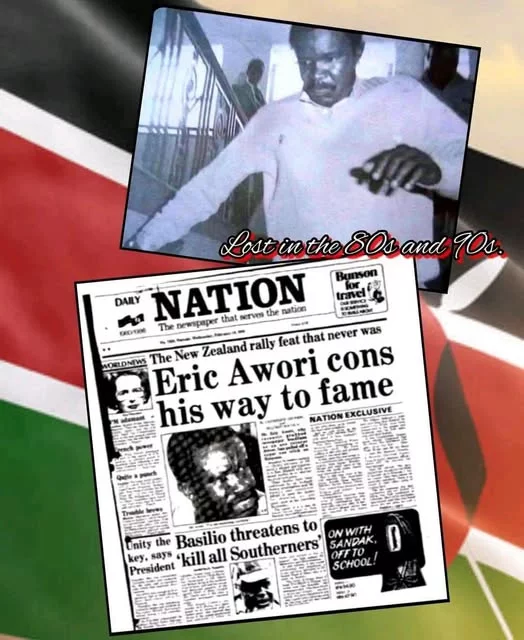
For about three days the country followed his supposed battle for victory.
On February 10, 1986, a telex reached Nairobi newsrooms announcing that Awori had rewritten motoring history.
It claimed he had become the first African driver ever to win a contest in a European country.
The New Zealand High Commissioner in Nairobi was reportedly confused by all the coverage.
He confirmed that no such reverse driving race had ever taken place in his country.
That single denial unraveled the entire scheme.
Investigators established that Awori had never driven in reverse from Mombasa to Nairobi.
He had never travelled to New Zealand at all.
The telex messages that had fooled newsrooms, sponsors and a government minister had actually been sent from an ordinary office in Westlands and another on Mama Ngina Street in Nairobi.
Eric Awori was eventually unmasked as a fraudster and charged in cour
Eric Awori was the scion of one of Kenya's well known families.
You can guess who his family is!!!
In 1985 he set out to manufacture a legend for himself.
Kenya was already proud of its motoring heroes at the time.
Joginder Singh and Shekhar Mehta had made rallying a source of national pride.
Awori decided he wanted his own chapter in that story.
Awori told the press he had driven a car in reverse gear from Mombasa to Nairobi.
He claimed the journey continued to Nakuru, then Rongai, then back to Nairobi.
He said he was chasing the world record then held by an American named Gerald Hoagland.
Westlands Motors gave him a brand new Toyota Corolla for the attempt.
Other sponsors came in with cash and goods.
“I took it as a personal challenge. If this American could do it, why not me?” he told journalists afterward.
Nobody appears to have checked the claim before celebrating it.
He was feted at a reception at the Hilton Hotel in Nairobi and handed a global award for the feat.
Riding on that manufactured fame, Awori announced an even bigger stunt.
He said he would reverse a seven tonne lorry all the way from Mombasa to Nairobi.
DT Dobie donated a Mercedes Benz truck for the attempt.
The truck was loaded with building materials donated by Mombasa traders for a harambee classroom.
DT Dobie also gave fuel worth ten thousand shillings, a large sum at the time.
The Daily Nation reported that a Mr John Miller had arrived in Nairobi as an independent adjudicator for the Guinness Book of Records.
Awori said he would leave Mombasa on December 11 and arrive at Uhuru Park on December 12, in time for Jamhuri Day celebrations.
Assistant minister Sharrif Nassir personally flagged him off on the night of December 11.
This means a sitting government official lent his office to a con before anyone had checked a single fact.
Telex updates on the lorry's progress were sent to the Kenya News Agency throughout the journey.
The final telex came from “John Miller” of the Guinness Book of Records, confirming that Awori had broken another world record.
In reality nobody could say what actually happened to that lorry after it left Mombasa.
Two fabricated Kenyan records were apparently not enough.
Early in 1986 Awori announced he would compete in a reverse driving contest in Auckland, New Zealand.
Companies queued up to sponsor him.
The Daily Nation ran a report describing “a tired looking Eric Awori and his service crew” arriving in Auckland to a welcome from about five thousand reverse driving enthusiasts.
For about three days the country followed his supposed battle for victory.
On February 10, 1986, a telex reached Nairobi newsrooms announcing that Awori had rewritten motoring history.
It claimed he had become the first African driver ever to win a contest in a European country.
The New Zealand High Commissioner in Nairobi was reportedly confused by all the coverage.
He confirmed that no such reverse driving race had ever taken place in his country.
That single denial unraveled the entire scheme.
Investigators established that Awori had never driven in reverse from Mombasa to Nairobi.
He had never travelled to New Zealand at all.
The telex messages that had fooled newsrooms, sponsors and a government minister had actually been sent from an ordinary office in Westlands and another on Mama Ngina Street in Nairobi.
Eric Awori was eventually unmasked as a fraudster and charged in cour