

wakimani
Elder Lister
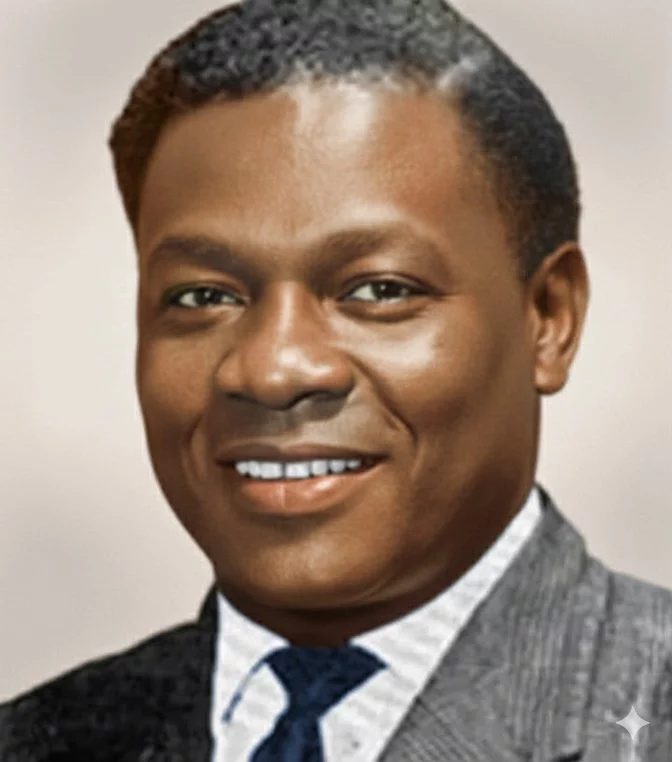
Ambrose Michael Ofafa was one of colonial Kenya's most prominent African civic and political figures, a teacher, trade unionist, businessman, and nationalist politician whose career bridged the world of the colonial administration and that of the emerging African independence movement.
Ofafa was among the most educated African Kenyans of the colonial time, and his ease of movement between African nationalists and colonial officials made him a distinctive figure in Nairobi's civic life. He was closely connected to some of the era's most important nationalist leaders and was a great confidant of Jaramogi Oginga Odinga, a friend of Jomo Kenyatta, and a contemporary of figures such as Ramogi Achieng Oneko, C.M.G. Argwings Kodhek, and Tom Mboya.
Born in 1913 to Zakaria Oluta Ofafa and Marcela Onyaka Ofafa at Alego Kalkada in the present day Siaya County Ofafa was the first-born in a family of nine children and moved with his parents to Rang'ala Catholic Mission across the Nzoia River, where his father studied religion and later graduated and worked as a teacher.
His schooling followed a well-defined missionary and teacher-training path typical of ambitious young Africans of his generation. He received his early education at Rang'ala alongside his childhood friend Argwings Kodhek (whose own father also taught at the mission), and the two later proceeded to St Mary's School in Yala, another Catholic institution.
After completing intermediate studies, Ofafa and Agwenge wuod Kodhek went on to St Mary's Teacher Training College in Yala, which was later transferred to Eregi, to train as teachers. Ofafa qualified as a teacher and attended St. Mary's Teacher Training College in Yala and Eregi Teachers College upon graduation while Agwenge went on to Uganda for further studies. Ofafa settled into a teaching post at St Mary's School, Yala, where he taught until 1938.
His career after teaching was varied and progressively more prominent. In 1938 he left teaching to join the East African Railways and Harbours, first serving as assistant station master in Nairobi, then being promoted two years later to Stationmaster and posted to Kahawa, before being transferred to Lumbwa station. He then joined the Kenya Postal Services in 1942, rising to postmaster at the Kikuyu station in 1944, before moving to The East African Standard newspaper, where he worked as an accountant.
Ofafa later left journalism to become a paymaster for the army, and eventually went into business with financial help from his younger brother, Andrew Waka. On the political front, he served as national treasurer of the Kenya African Union (KAU), the precursor to the Kenya African National Union (KANU), and was nominated by British Governor, Sir Philip Mitchell to serve as a member of the Nairobi City Council, one of the few Africans given such recognition at the time. Other KAU officials of the period included Jomo Kenyatta as president, Ramogi Achieng’ Oneko as secretary, and Kung'u Karumba as deputy treasurer, with members such as Paul Ngei, Bildad Kaggia, Samuel Onyango Ayodo, and James Beuttah.
As a nominated member of the Nairobi Municipal Council, Ofafa represented African interests at a time when African voices were often ignored, championing better housing, healthcare, and education for Nairobi's growing African population, and was known for a style of diplomacy and moderation rather than radical agitation. He deeply believed that gradual change and strong civic institutions could pave the way to African empowerment.
His nationalism, then, was expressed less through direct confrontation and more through building African institutional capacity, financial and political organization and mobilization through KAU, and representation within the colonial civic structures themselves while maintaining close personal ties to Jomo Kenyatta, whom he reportedly hosted at his rural home in Alego Kalkada in early 1949.
His death, in November 1953, occurred amid the tensions of the Mau Mau Emergency, and the exact circumstances remain genuinely disputed among sources. According to one detailed account, Ofafa was shot outside Kaloleni Estate on Doonholm Road (presently Jogoo Road) on November 24, 1953, while driving home in a hired car that had developed mechanical problems near Tok Komwanda aka City Stadium; he died two days later, on November 26, 1953, at King George VI Hospital (now Kenyatta National Hospital).
Other accounts give slightly different dates, with one source describing him as killed on November 21, 1953 by Mau Mau fighters in Kaloleni, and another Kisumu-focused history stating he was shot and critically injured during an alleged highway robbery, succumbing to his injuries two days later on November 26, 1953.
The identity and motive of his killers has long been debated with some claiming the assailants were common highway robbers, while others believed colonial government agents orchestrated the attack to incite conflict between the Kikuyu and Luo during the Mau Mau war, while colonial officials at the time attempted to attribute the killing to the Mau Mau movement itself. His family and his brother Andrew Waka rejected the idea that Mau Mau or the Kikuyu community was responsible, insisting the killing was plotted by colonial authorities to strain Luo-Kikuyu relations at the very onset of the uprising. Even amid this uncertainty, Ofafa reportedly used his final hours, at the hospital, to call on his Luo community not to seek revenge against the Kikuyu.
The aftermath of his death cemented his place in Kenya's national memory. After he died, the colonial government and his admirers decided to honor him by constructing and naming new buildings across several Kenyan towns; every occupation he had worked in contributed money, Luo communities everywhere donated funds, and Jaramogi Oginga Odinga personally toured major Luo residences across East Africa soliciting contributions for the memorial buildings. His funeral at Alego Kalkada was a major event attended by prominent figures from across western Kenya, with the colonial Governor, Sir Evelyn Baring, represented at the ceremony.
Today his legacy survives in Nairobi's urban landscape through the Eastlands estates of Ofafa Jericho, Ofafa Maringo, and Ofafa Jerusalem, the well-known Ofafa Jericho High School, and the Ambrose Ofafa Memorial Hall in Kisumu, the neighborhood itself named after him. Ofafa remains one of the few African politicians who had also received a Colonial Service award as part of the 1953 Coronation Honours.
Ofafa was among the most educated African Kenyans of the colonial time, and his ease of movement between African nationalists and colonial officials made him a distinctive figure in Nairobi's civic life. He was closely connected to some of the era's most important nationalist leaders and was a great confidant of Jaramogi Oginga Odinga, a friend of Jomo Kenyatta, and a contemporary of figures such as Ramogi Achieng Oneko, C.M.G. Argwings Kodhek, and Tom Mboya.
Born in 1913 to Zakaria Oluta Ofafa and Marcela Onyaka Ofafa at Alego Kalkada in the present day Siaya County Ofafa was the first-born in a family of nine children and moved with his parents to Rang'ala Catholic Mission across the Nzoia River, where his father studied religion and later graduated and worked as a teacher.
His schooling followed a well-defined missionary and teacher-training path typical of ambitious young Africans of his generation. He received his early education at Rang'ala alongside his childhood friend Argwings Kodhek (whose own father also taught at the mission), and the two later proceeded to St Mary's School in Yala, another Catholic institution.
After completing intermediate studies, Ofafa and Agwenge wuod Kodhek went on to St Mary's Teacher Training College in Yala, which was later transferred to Eregi, to train as teachers. Ofafa qualified as a teacher and attended St. Mary's Teacher Training College in Yala and Eregi Teachers College upon graduation while Agwenge went on to Uganda for further studies. Ofafa settled into a teaching post at St Mary's School, Yala, where he taught until 1938.
His career after teaching was varied and progressively more prominent. In 1938 he left teaching to join the East African Railways and Harbours, first serving as assistant station master in Nairobi, then being promoted two years later to Stationmaster and posted to Kahawa, before being transferred to Lumbwa station. He then joined the Kenya Postal Services in 1942, rising to postmaster at the Kikuyu station in 1944, before moving to The East African Standard newspaper, where he worked as an accountant.
Ofafa later left journalism to become a paymaster for the army, and eventually went into business with financial help from his younger brother, Andrew Waka. On the political front, he served as national treasurer of the Kenya African Union (KAU), the precursor to the Kenya African National Union (KANU), and was nominated by British Governor, Sir Philip Mitchell to serve as a member of the Nairobi City Council, one of the few Africans given such recognition at the time. Other KAU officials of the period included Jomo Kenyatta as president, Ramogi Achieng’ Oneko as secretary, and Kung'u Karumba as deputy treasurer, with members such as Paul Ngei, Bildad Kaggia, Samuel Onyango Ayodo, and James Beuttah.
As a nominated member of the Nairobi Municipal Council, Ofafa represented African interests at a time when African voices were often ignored, championing better housing, healthcare, and education for Nairobi's growing African population, and was known for a style of diplomacy and moderation rather than radical agitation. He deeply believed that gradual change and strong civic institutions could pave the way to African empowerment.
His nationalism, then, was expressed less through direct confrontation and more through building African institutional capacity, financial and political organization and mobilization through KAU, and representation within the colonial civic structures themselves while maintaining close personal ties to Jomo Kenyatta, whom he reportedly hosted at his rural home in Alego Kalkada in early 1949.
His death, in November 1953, occurred amid the tensions of the Mau Mau Emergency, and the exact circumstances remain genuinely disputed among sources. According to one detailed account, Ofafa was shot outside Kaloleni Estate on Doonholm Road (presently Jogoo Road) on November 24, 1953, while driving home in a hired car that had developed mechanical problems near Tok Komwanda aka City Stadium; he died two days later, on November 26, 1953, at King George VI Hospital (now Kenyatta National Hospital).
Other accounts give slightly different dates, with one source describing him as killed on November 21, 1953 by Mau Mau fighters in Kaloleni, and another Kisumu-focused history stating he was shot and critically injured during an alleged highway robbery, succumbing to his injuries two days later on November 26, 1953.
The identity and motive of his killers has long been debated with some claiming the assailants were common highway robbers, while others believed colonial government agents orchestrated the attack to incite conflict between the Kikuyu and Luo during the Mau Mau war, while colonial officials at the time attempted to attribute the killing to the Mau Mau movement itself. His family and his brother Andrew Waka rejected the idea that Mau Mau or the Kikuyu community was responsible, insisting the killing was plotted by colonial authorities to strain Luo-Kikuyu relations at the very onset of the uprising. Even amid this uncertainty, Ofafa reportedly used his final hours, at the hospital, to call on his Luo community not to seek revenge against the Kikuyu.
The aftermath of his death cemented his place in Kenya's national memory. After he died, the colonial government and his admirers decided to honor him by constructing and naming new buildings across several Kenyan towns; every occupation he had worked in contributed money, Luo communities everywhere donated funds, and Jaramogi Oginga Odinga personally toured major Luo residences across East Africa soliciting contributions for the memorial buildings. His funeral at Alego Kalkada was a major event attended by prominent figures from across western Kenya, with the colonial Governor, Sir Evelyn Baring, represented at the ceremony.
Today his legacy survives in Nairobi's urban landscape through the Eastlands estates of Ofafa Jericho, Ofafa Maringo, and Ofafa Jerusalem, the well-known Ofafa Jericho High School, and the Ambrose Ofafa Memorial Hall in Kisumu, the neighborhood itself named after him. Ofafa remains one of the few African politicians who had also received a Colonial Service award as part of the 1953 Coronation Honours.