
You are using an out of date browser. It may not display this or other websites correctly.
You should upgrade or use an alternative browser.
You should upgrade or use an alternative browser.
America and Israel Strikes Iran : Supreme Leader Ali Khamenei Dead
- Thread starter トランプ支持の黒人たち
- Start date
- Featured
Tommy Kwesule.
Elder Lister
Trump’s War Is Staggering to an Incoherent Defeat
Even the president’s supporters are alarmed.No one yet knows the details of the Iran deal that President Trump has been teasing on social media for the past day or so. The president himself has admonished his followers not to “listen to the losers, who are critical about something they know nothing about.” But as this war stumbles to a close, it is clear that the president, too, is lost: He didn’t know what he was doing when he began it, and now he doesn’t know how to get out of it.
Only a day ago, Trump was trying to project confidence. Yesterday, he hailed an agreement with Iran as mostly done; it was, he said on his Truth Social site, “largely negotiated” and close to “finalization.” The Iranians, of course, immediately disputed this characterization, and by the next day, Trump was backpedaling. “If I make a deal with Iran,” he posted this afternoon, “it will be a good and proper one, not like the one made by Obama, which gave Iran massive amounts of CASH, and a clear and open path to a Nuclear Weapon.” The agreement that was only a day earlier “largely negotiated” was now only a notional memorandum, and Trump griped that it was unfair to criticize it because “nobody has seen it, or knows what it is,” and it “isn’t even fully negotiated yet.”
By this afternoon, Trump was reduced to posting a meme of a jet carrying a bomb under its wing with Thank you for your attention to this matter written on it.
Many of those most alarmed about what Trump might end up accepting to get out of this dead-end conflict in Iran are not his critics, but his supporters. Trump’s enablers may not have access to the details of an agreement, but they’re clearly worried: Senators Lindsey Graham, Roger Wicker, and Ted Cruz were all posting expressions of shock and dismay on social media. Graham said that any deal that caves to Iran “makes one wonder why the war started to begin with”; Wicker said that a possible 60-day cease-fire would be a “disaster.” Cruz gently suggested that the tsar does not know what his devious boyars are up to, describing the deal as “being pushed by some voices in the administration.”
Even Michael Flynn, the disgraced former national security adviser, posted a long screed warning Trump not to make a deal. “I know you want to get out of this mess,” he said. He then counseled the president to “give it some thought.” Trump’s former Secretary of State and CIA Director Mike Pompeo weighed in as well, comparing the possible outline of a deal to the kind of thing Barack Obama’s team might have come up when designing the 2015 nuclear deal with Iran, the Joint Comprehensive Plan of Action (JCPOA), and warning that it could mean that America would end up paying “the IRGC to build a WMD program and terrorize the world.” Trump withdrew from the JCPOA in 2018, during his first term, and he regularly speaks of the JCPOA (and Obama) with contempt; Pompeo’s comparison was sure to infuriate the Trump team.
And sure enough, Trump’s communications director, Steven Cheung, responded almost immediately to Pompeo—and gave the world a glimpse of what appears to be some sweaty panic building inside the White House. “Mike Pompeo has no idea what the fuck he’s talking about,” Cheung posted on X. “He should shut his stupid mouth and leave the real work to the professionals. He’s not read into anything that’s happening, so how would he know.” (Cheung also kept posting updates about Trump working in the Oval Office on a Saturday, as if this were an amazing illustration of the president’s work ethic.)
Trump’s worried sycophants probably know that the details of an eventual agreement likely do not matter very much at this point. As my colleague David Frum noted earlier today, the war has already ended with America’s strategic defeat by the Islamic Republic of Iran, an outcome for which Trump is directly responsible. How much Iran will get away with, and how much humiliation the United States will endure, has yet to be ironed out by the negotiators, but the war is now almost certain to end with Tehran’s theocrats firmly in power, and with a stronger chokehold both on their own people and on the international economy than they had three months ago.
Tommy Kwesule.
Elder Lister
US launches new strikes as Rubio warns Iran over Strait
US Secretary of State Marco Rubio said the Strait of Hormuz has to be open 'one way or the other'US forces have conducted what Washington called defensive strikes in southern Iran, the latest escalation in the war between the two nations.
Describing the strikes against targets including boats attempting to lay mines and missile launch sites, Secretary of State Marco Rubio said the Strait of Hormuz has to be open “one way or the other.”
“The straits have to be open, they’re going to be open one way or the other, so they need to be open,” Rubio told reporters on a trip to India.
Despite a ceasefire in place since early April, US Central Command said in a statement on Monday it had carried out fresh strikes designed “to protect our troops from threats posed by Iranian forces.”

What the latest US strikes on Iran mean for a peace deal
After military strikes overnight, there are concerns about the future of peace discussions
 inews.co.uk

US launches new strikes as Rubio warns Iran over Strait
US Secretary of State Marco Rubio said the Strait of Hormuz has to be open 'one way or the other'
US forces have conducted what Washington called defensive strikes in southern Iran, the latest escalation in the war between the two nations.
Describing the strikes against targets including boats attempting to lay mines and missile launch sites, Secretary of State Marco Rubio said the Strait of Hormuz has to be open “one way or the other.”
“The straits have to be open, they’re going to be open one way or the other, so they need to be open,” Rubio told reporters on a trip to India.
Despite a ceasefire in place since early April, US Central Command said in a statement on Monday it had carried out fresh strikes designed “to protect our troops from threats posed by Iranian forces.”
What the latest US strikes on Iran mean for a peace deal
After military strikes overnight, there are concerns about the future of peace discussions
Tommy Kwesule.
Elder Lister
House Votes to Rein In Trump on Iran War, in a Bipartisan Rebuke
A measure to direct an end to U.S. engagement in Iran was adopted with a handful of Republicans in support, sending a signal of opposition to the president’s handling of the war.The House on Wednesday voted to direct President Trump to withdraw U.S. forces from the conflict with Iran or win approval from Congress to continue the war, after four Republicans sided with Democrats in a striking sign of growing opposition to a military campaign now in its fourth month.
Adoption of the resolution was a remarkable rebuke to Mr. Trump and his handling of the conflict, after he has repeatedly dismissed any effort by Congress to curb his power and as the G.O.P. has largely ceded its prerogatives to do so, deferring to him time and again. Republicans had abruptly postponed the vote two weeks ago, recognizing that they did not have sufficient votes to defeat the measure and wanting to spare themselves and the president the affront.
But they made no headway over the ensuing days in winning converts, as the conflict has dragged on and Mr. Trump has made little progress toward ending it. G.O.P. leaders were unable to delay the vote any longer because Democrats had invoked the War Powers Resolution, which requires consideration of such measures within a limited period of time.
The move was also the latest reflection of divisions between Republicans in Congress and the president on a range of issues as their interests diverge in the run-up to the midterm congressional elections. It came after Senate Republicans have in recent days forced Mr. Trump to abandon his request for $1 billion in security funding for his ballroom project and a plan that the Justice Department announced to create a federal fund to pay claimants who accuse the government of having victimized them.
The vote was 215 to 208 to adopt the war powers resolution, sending it to the Senate. Even if it were to pass both chambers, the ability of lawmakers to force a president to withdraw troops remains a contested legal question, and Mr. Trump and his senior aides have dismissed any effort by Congress to limit his war powers as unconstitutional.
Open modal at item 1 of 4

Open modal at item 2 of 4

Open modal at item 3 of 4

Open modal at item 4 of 4

From top left, clockwise, Representatives Tom Barrett of Michigan, Brian Fitzpatrick of Pennsylvania, Warren Davidson of Ohio and Thomas Massie of Kentucky crossed party lines to vote with Democrats in favor of the resolution.
But the vote in the House, and a similar one in the Senate last month when a handful of G.O.P. defectors broke from the president and opposed the war, indicate an increasing willingness by some members of the president’s party to pressure him to end a conflict that a majority of Americans say is not worth the costs.
Republican Representatives Tom Barrett of Michigan, Brian Fitzpatrick of Pennsylvania, Warren Davidson of Ohio and Thomas Massie of Kentucky crossed party lines to vote with Democrats in favor of the resolution. Representative Jared Golden, Democrat of Maine, who had previously opposed similar measures, switched his position to support it.
Representative Gregory W. Meeks of New York, the top Democrat on the Foreign Affairs Committee who led the measure, praised its Republican supporters for standing up to a president who has in recent weeks sought political retribution against members of his party who have bucked him, including Mr. Massie.
Editors’ Picks

Are We All Supposed to Wear Socks With Sandals Now?

‘Cape Fear’ and 7 More Shows to Watch on TV This Week

Is It Bad to Sleep With My Pet?
Moments after the vote, he said the Republican defectors “had the wherewithal to search within themselves to do the right thing.”
Though the few defections were notable, almost every Republican voted against the resolution. Most of them have accepted the Trump administration’s claim that the initial operation had concluded and that the most recent strikes in Iran were necessary acts of self-defense, arguing that gave him full power as the commander in chief to order American troops to respond.
Republican lawmakers in the House had been able to maintain enough unity to ward off previous attempts to limit Mr. Trump’s authority.
Moments before the vote, Speaker Mike Johnson told reporters that passing the resolution would be a “very dangerous prospect” and that it would “weaken” the president’s ability as commander in chief to continue seeking a peaceful resolution to the conflict.
Image

Speaker Mike Johnson during a news conference at the Capitol on Wednesday.Credit...Demetrius Freeman for The New York Times
Earlier this week, however, Mr. Trump declared that the pace of diplomatic talks through interlocutors as they seek to reach a preliminary agreement, was starting “to get very boring.”
Many have dismissed Democrats’ war powers measures, which call for the removal of most U.S. forces from hostilities in Iran, as politically motivated attacks on the president that would leave American interests unprotected.
Democrats contended that members of both parties must protect the role of Congress to determine when and how the country undertakes prolonged combat operations overseas.
Mr. Davidson, who in March sided with Democrats in favor of a war powers measure on Iran but later reversed himself as Mr. Trump and party leaders applied intense pressure for Republicans to stay in line, framed his decision to vote with Democrats again on Wednesday again as a call for Congress to be involved in outlining a plan that would allow the operation to succeed.
“Define the mission. Authorize the mission. Accomplish the mission,” he said in a brief statement following his vote.
Mr. Barrett, a first-term Republican facing a competitive re-election race, similarly argued that the time for the president to act alone had expired and Congress needed more of a say.
“My support of this resolution tonight is consistent with my belief that it is time for Congress to decide the scope of the mission and the appropriate limits on the use of force in Iran,” he said in a statement.
The House’s vote was only the first step in a complicated and likely uphill path for the resolution. It now heads to the Senate, which under the war powers law must take it up within roughly two and a half weeks. It does not need a presidential signature, but even if Congress were to clear the measure, its legal force would remain uncertain.
While Congress has historically deployed concurrent resolutions to express its position on an issue without requiring presidential approval, the Supreme Court held in 1983 that in order for congressional actions to have binding legal effect, they must go through the standard legislative process, including being presented to the president to be signed into law.
That means any attempt to make the directive to withdraw U.S. forces in Iran legally enforceable would almost certainly require Mr. Trump’s signature, or have two-thirds of both chambers vote to override a veto.
The Senate is pursuing a parallel track. Last month, four Republicans and all but one Democrat voted to advance a separate war powers resolution toward a full floor vote, but that effort faces procedural hurdles of its own.
But while the practical odds of either measure forcing an end to the war remain slim, the action in both chambers amounted to a notable reproach of the president’s handling of the conflict.
Democrats have argued that even symbolic congressional action could pressure Mr. Trump to alter course by signaling growing bipartisan discomfort with a longer war.
“Congress has followed the Constitution today,” Mr. Meeks said. “Democrats and Republicans said ‘Enough is enough.’ The Constitution says only Congress can determine when we go to war.”
Robert Jimison covers Congress for The Times, with a focus on defense issues and foreign policy.
Megan Mineiro is a Times congressional reporter and a member of the 2025-26 Times Fellowship class, a program for early-career journalists.
Tommy Kwesule.
Elder Lister
Tommy Kwesule.
Elder Lister
Tommy Kwesule.
Elder Lister
Trump says ‘there would be no Israel’ if not for him after clash with Netanyahu
Trump also hit back at claims he only started the war with Iran because he was “tricked” into the conflict by the Israeli prime minister
Donald Trump has claimed that “there would be no Israel” if not for him, as he denied he had been “tricked” into the ongoing conflict with Iran.
The US president and Israeli prime minister Benjamin Netanyahu recently had a furious call over the war, according to an Axios report, with Trump said to have called his counterpart “crazy”.
In a wide-ranging interview with the conservative podcast Pod Force One released on Wednesday, Trump pushed back at suggestions he had been manoeuvred into starting the war three months ago.
“I’m the one that started it,” the president insisted. “I started it because we can’t let them [Iran] have a nuclear weapon. If there wasn’t me there would be no Israel right now.”
During the interview, the president was asked directly about the call with Netanyahu and whether reports of the ill-tempered exchange were accurate.
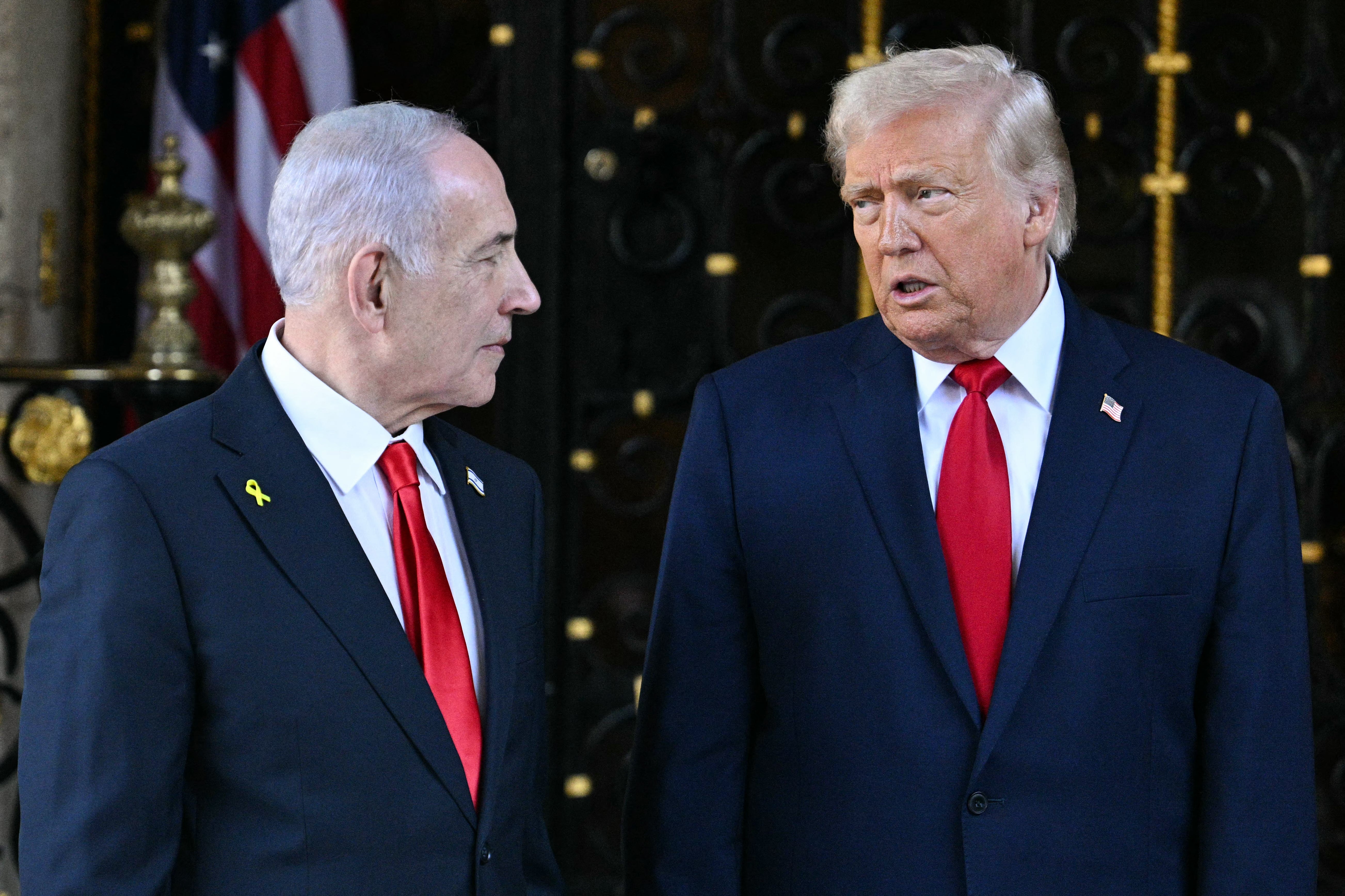
Donald Trump reportedly had a heated call with Israeli Prime Minister Benjamin Netanyahu (AFP/Getty)
“Axios reported that you had a phone call with BB Netanyahu, the prime minister of Israel, in which you were angry with him,” podcast host and conservative commentator Miranda Devine said, before detailing the claims.
“You said ‘are you f***ing crazy’, ‘what are you f***ing doing’, ‘I helped you stay out of jail’. Is that true? Did you speak to him in those terms?
Trump responded: “I did. I wouldn’t say angry, I was a little bit perturbed at his constantly fighting with Lebanon. At some point I said, ‘Bibi you’ve got to stop this. You’ve got to stop it’.”
But he insisted that the pair remain cordial.
“We have a very good relationship,” Trump added. “I like him a lot. I’ve worked very well with him.”

 www.independent.co.uk
Trump also hit back at claims he only started the war with Iran because he was “tricked” into the conflict by the Israeli prime minister
Donald Trump has claimed that “there would be no Israel” if not for him, as he denied he had been “tricked” into the ongoing conflict with Iran.
The US president and Israeli prime minister Benjamin Netanyahu recently had a furious call over the war, according to an Axios report, with Trump said to have called his counterpart “crazy”.
In a wide-ranging interview with the conservative podcast Pod Force One released on Wednesday, Trump pushed back at suggestions he had been manoeuvred into starting the war three months ago.
“I’m the one that started it,” the president insisted. “I started it because we can’t let them [Iran] have a nuclear weapon. If there wasn’t me there would be no Israel right now.”
During the interview, the president was asked directly about the call with Netanyahu and whether reports of the ill-tempered exchange were accurate.
Donald Trump reportedly had a heated call with Israeli Prime Minister Benjamin Netanyahu (AFP/Getty)
“Axios reported that you had a phone call with BB Netanyahu, the prime minister of Israel, in which you were angry with him,” podcast host and conservative commentator Miranda Devine said, before detailing the claims.
“You said ‘are you f***ing crazy’, ‘what are you f***ing doing’, ‘I helped you stay out of jail’. Is that true? Did you speak to him in those terms?
Trump responded: “I did. I wouldn’t say angry, I was a little bit perturbed at his constantly fighting with Lebanon. At some point I said, ‘Bibi you’ve got to stop this. You’ve got to stop it’.”
But he insisted that the pair remain cordial.
“We have a very good relationship,” Trump added. “I like him a lot. I’ve worked very well with him.”
Trump says ‘there would be no Israel’ if not for him after clash with Netanyahu
Trump also hit back at claims he only started the war with Iran because he was “tricked” into the conflict by the Israeli prime minister
www.independent.co.uk
Tommy Kwesule.
Elder Lister
Tommy Kwesule.
Elder Lister
Tommy Kwesule.
Elder Lister
Tommy Kwesule.
Elder Lister
Israeli military launches retaliatory strikes on Iran after attacks on northern Israel
Summary
- Israel's military says it has launched strikes on military targets in western and central Iran, after warning it would retaliate for the first Iranian attack on Israel since April
- US President Donald Trump earlier urged his Israeli counterpart not to retaliate for the Iranian strikes, according to several outlets. Fox News earlier reported that Trump also told Iran "that's enough"
- Iran's Islamic Revolutionary Guard Corps (IRGC) says multiple waves of missiles fired at northern Israel are "the beginning of a full week of continuous strikes"
- Most missiles targeting Israel appear to have been intercepted, and Israelis have now been told they can leave shelters
- Earlier on Sunday, Israel said it struck Hezbollah targets in southern Beirut, prompting threats of an Iranian response
- Israeli strikes on Beirut raise questions about the limits of US influence over its partner and the narrowing range of options for Washington to end the war, the BBC's John Sudworth writes
Tommy Kwesule.
Elder Lister
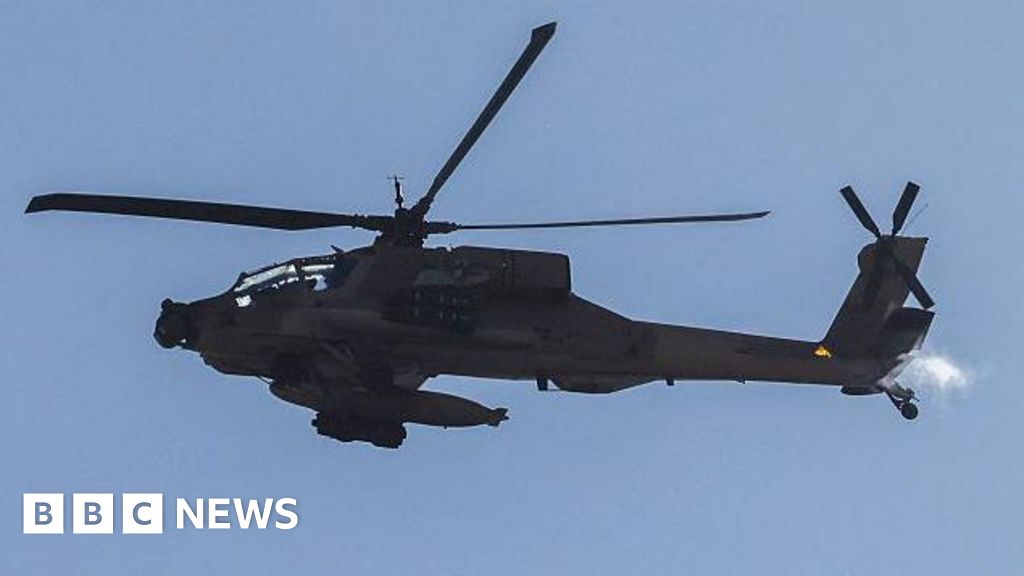
US and Iran exchange fire after American patrol helicopter downed in Hormuz
President Donald Trump earlier accused Iran of shooting down the US helicopter over the Strait of Hormuz and vowed to respond.
 www.bbc.com
Tommy Kwesule.
Elder Lister
Tommy Kwesule.
Elder Lister
Tommy Kwesule.
Elder Lister
Tommy Kwesule.
Elder Lister