
You are using an out of date browser. It may not display this or other websites correctly.
You should upgrade or use an alternative browser.
You should upgrade or use an alternative browser.
America and Israel Strikes Iran : Supreme Leader Ali Khamenei Dead
- Thread starter トランプ支持の黒人たち
- Start date
- Featured


I don't think even Trump would go that far. The repercussions ..... I think he's going to commit war crimes by targeting civilian infrastructure, energy and transport.

Clemens
Elder Lister
The madness of one man and his minions should be halted.

Tommy Kwesule.
Elder Lister

Tommy Kwesule.
Elder Lister
Iranian Oil Refining Company confirms attack on Lavan refinery, Shana reports
DUBAI, April 8 (Reuters) - An oil refinery on Iran's Lavan Island was targeted in an "enemy attack" on Wednesday, which caused no casualties, the National Iranian Oil Refining and Distribution Company said, according to the Oil Ministry's news outlet, Shana.
The company said the facility was hit at around 10 a.m. (0630 GMT), adding that safety and firefighting teams were working to contain the blaze and secure the site.
Asked whether Israel's military was involved in a strike on the refinery, Israeli military spokesperson Lieutenant Colonel Nadav Shoshani told reporters: "No, (we) weren't involved".
Tommy Kwesule.
Elder Lister
How Trump Took the U.S. to War With Iran
In a series of Situation Room meetings, President Trump weighed his instincts against the deep concerns of his vice president and a pessimistic intelligence assessment. Here’s the inside story of how he made the fateful decision.The black S.U.V. carrying Prime Minister Benjamin Netanyahu arrived at the White House just before 11 a.m. on Feb. 11. The Israeli leader, who had been pressing for months for the United States to agree to a major assault on Iran, was whisked inside with little ceremony, out of view of reporters, primed for one of the most high-stakes moments in his long career.
U.S. and Israeli officials gathered first in the Cabinet Room, adjacent to the Oval Office. Then Mr. Netanyahu headed downstairs for the main event: a highly classified presentation on Iran for President Trump and his team in the White House Situation Room, which was rarely used for in-person meetings with foreign leaders.
Mr. Trump sat down, but not in his usual position at the head of the room’s mahogany conference table. Instead, the president took a seat on one side, facing the large screens mounted along the wall. Mr. Netanyahu sat on the other side, directly opposite the president.
Appearing on the screen behind the prime minister was David Barnea, the director of Mossad, Israel’s foreign intelligence agency, as well as Israeli military officials. Arrayed visually behind Mr. Netanyahu, they created the image of a wartime leader surrounded by his team.
Tommy Kwesule.
Elder Lister
Trump has his deal. But this senseless episode has caused him incalculable damage
Trump really sounds like a man who desperately wants it all to be over
In the end it was the ultimate Taco moment – thank God.
Donald Trump’s decision to call off his apocalyptic strikes on Iran meant he once again lived up to the nickname Wall Street traders have given him:
Trump Always Chickens Out.
But my goodness, didn’t we come uncomfortably close to what could have been the start of the third World War.
Trump had vowed to launch an air assault at 1am UK time on Wednesday morning that would target Iran’s power plants and bridges.
“A whole civilization will die tonight,” the President said on Monday, adding with jaw-dropping glibness: “I don’t want that to happen, but it probably will.”
The President’s U-turn came 90 minutes before the deadline that put the entire world on edge and drew worldwide criticism, with even Pope Leo calling the plans “truly unacceptable”.
The threat of a war crime – the bombing of civilian targets – had sparked the biggest pushback against Trump since 2018, when Pope Francis led the criticism of his separation of migrant families.
In his announcement of the ceasefire, Trump said that there would be a two-week pause in his threat to annihilate the entire Iranian nation.

Trump has his deal. But this senseless episode has caused him incalculable damage
Trump really sounds like a man who desperately wants it all to be over
 inews.co.uk
Tommy Kwesule.
Elder Lister
US and Iran agree to provisional ceasefire as Tehran says it will reopen strait of Hormuz
US president abandons threat for Iran to surrender or face destruction with last-minute intervention led by PakistanThe US and Iran agreed to a two-week conditional ceasefire on Tuesday evening, which included a temporary reopening of the strait of Hormuz, after a last-minute diplomatic intervention led by Pakistan, canceling an ultimatum from Donald Trump for Iran to surrender or face widespread destruction.
Trump’s announcement of the ceasefire agreement came less than two hours before the US president’s self-imposed 8pm Eastern time deadline to bomb Iran’s power plants and bridges in a move that legal scholars, as well as officials from numerous countries and the pope, had warned could constitute war crimes.
Just hours earlier, Trump had written on Truth Social: “A whole civilization will die tonight, never to be brought back again. I don’t want that to happen, but it probably will.” American B-52 bombers were reported to be en route to Iran before the ceasefire agreement was announced.
But by Tuesday evening, Trump announced that a ceasefire agreement had been mediated through Pakistan, whose prime minister, Shehbaz Sharif, had requested the two-week peace in order to “allow diplomacy to run its course”.

US and Iran agree to provisional ceasefire as Tehran says it will reopen strait of Hormuz
US president abandons threat for Iran to surrender or face destruction with last-minute intervention led by Pakistan
Tommy Kwesule.
Elder Lister
How Pakistan helped secure a fragile ceasefire between the US and Iran
In the hours before the two-week ceasefire between Iran and the US was announced, there were some small signs of hope from Pakistan.Speaking anonymously, a Pakistan source told the BBC that the talks continued "at pace", with Pakistan operating as an intermediary between Iran and the US.
Those conducting the negotiations from Pakistan's side consisted of "a very small circle" and that the mood was "sombre and serious but still hopeful that a cessation of hostilities will be the outcome. There are a few hours left." The source said they were not part of that small circle.
Pakistan has acted as an intermediary between Iran and the US over the last few weeks, passing messages between the two. It has a historic relationship with Iran, a shared border and regularly refers to its "brotherly" relationship with the country.
As for the US relationship, President Trump has referred to the head of Pakistan's armed forces, Field Marshall Asim Munir, as his "favourite" Field Marshall and said that he knows Iran "better than most".
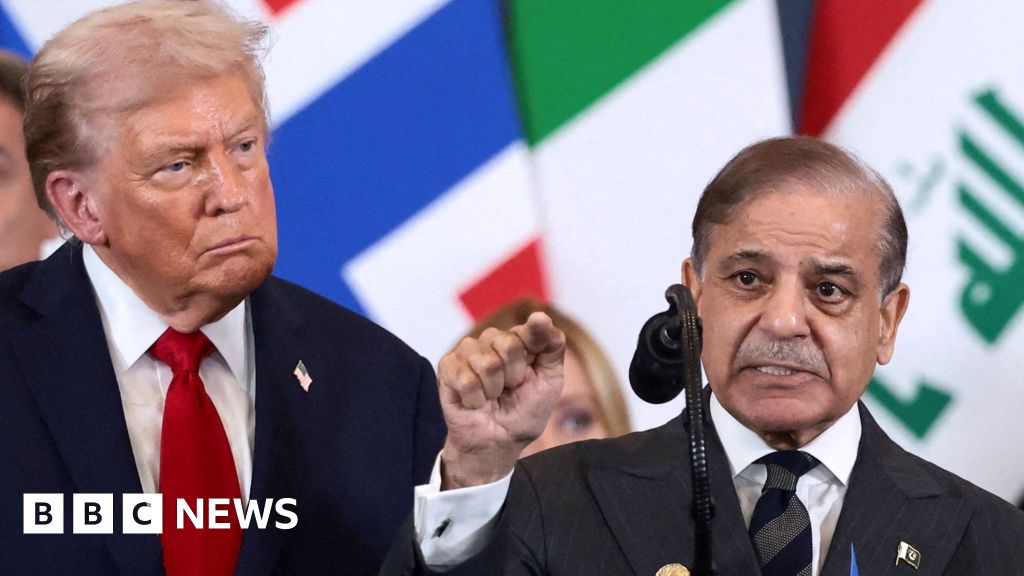
How Pakistan helped secure a fragile ceasefire between the US and Iran
Pakistan has a historic relationship with Iran, but an agreement was far from certain, writes the BBC’s Caroline Davies
 www.bbc.com
Clemens
Elder Lister
Deceit has been a white man's weapon for centuries.
Drumf is another kasongo. He has forgotten how the "failed influencers" helped in his re electionThis man is hilarious yet lacking in EQ
View attachment 113095
Tommy Kwesule.
Elder Lister
Tommy Kwesule.
Elder Lister
Trump says U.S. will blockade Strait of Hormuz after Iran peace talks fail
President Donald Trump on Sunday said the U.S. will blockade the Strait of Hormuz after talks held in Pakistan to end the Iran war hit the skids."Effective immediately, the United States Navy, the Finest in the World, will begin the process of BLOCKADING any and all Ships trying to enter, or leave, the Strait of Hormuz," Trump said in a post to his social media platform Truth Social. "The Blockade will begin shortly. Other Countries will be involved with this Blockade. Iran will not be allowed to profit off this Illegal Act of EXTORTION."
The announcement of a U.S. blockade of the strait likely scuttles any hopes that the war would end in the coming days following peace talks in Islamabad. It also threatens to exacerbate the economic crisis that has gripped global economies since the war broke out and Iran began restricting access to the strait, a chokepoint which carries about a fifth of the world's oil.
Trump said the U.S. blockade is an effort to stop Iran from policing the strait and benefiting economically while the rest of the world suffers from its closure.
"At some point, we will reach an 'ALL BEING ALLOWED TO GO IN, ALL BEING ALLOWED TO GO OUT' basis, but Iran has not allowed that to happen by merely saying, 'There may be a mine out there somewhere,' that nobody knows about but them," he said. "THIS IS WORLD EXTORTION, and Leaders of Countries, especially the United States of America, will never be extorted."
Trump also announced in the post that the U.S. Navy will "seek and interdict every vessel in International Waters that has paid a toll to Iran."

Trump says U.S. will blockade Strait of Hormuz after Iran peace talks fail
Trump said the U.S. blockade will stop Iran from policing the strait and benefiting economically while the rest of the world suffers from its closure.
Tommy Kwesule.
Elder Lister
Four Ways Trump’s War Is Weakening America
"When President Trump attacked Iran on Feb. 28, we called his decision reckless. He went to war without seeking congressional approval or the support of most allies. He offered thin and contradictory justifications to the American people. He failed to explain why this naïve attempt at regime change would end better than earlier attempts by the United States in Iraq, Afghanistan and elsewhere," writes the Times editorial board."We count four main setbacks for America’s national interests that are the direct result of Mr. Trump’s carelessness. These setbacks likewise weaken global democracy when authoritarians in China, Russia and elsewhere were already feeling emboldened."