America and Israel Strikes Iran : Supreme Leader Ali Khamenei Dead

Who do you support in the current conflict?

  • Iran

  • Israel & USA

  • Neither


Results are only viewable after voting.

Iranian Lawmakers Consider Imposing Tolls On Shipping Through Strait Of Hormuz​

Tehran will potentially monetise Iran's newfound grip, and the war will allow Tehran to impose maritime restrictions on states that Iran has sanctioned.


Tehran, Iran: Iran is planning a proposal to levy transit fees on vessels passing through the Strait of Hormuz, according to a lawmaker. The MP on Thursday said that Tehran will potentially monetise Iran’s newfound grip over the critical waterway through which a fifth of global oil and liquefied gas passes.

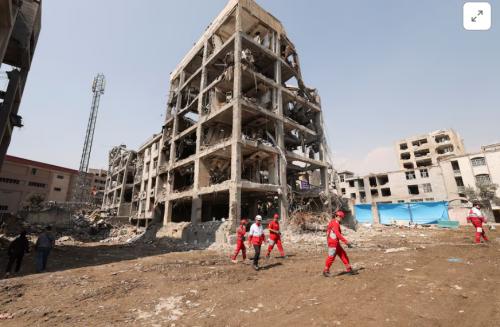
Iran has been disrupting maritime transit through the strait for vessels linked to the US and Israel after both the countries launched war against Tehran striking across its cities.

A lawmaker said that the parliament was considering a bill under which countries using the strait for shipping, energy transit and food supplies would be required to pay tolls and taxes to Iran, adding that a new regime for the Strait will follow the war’s end.
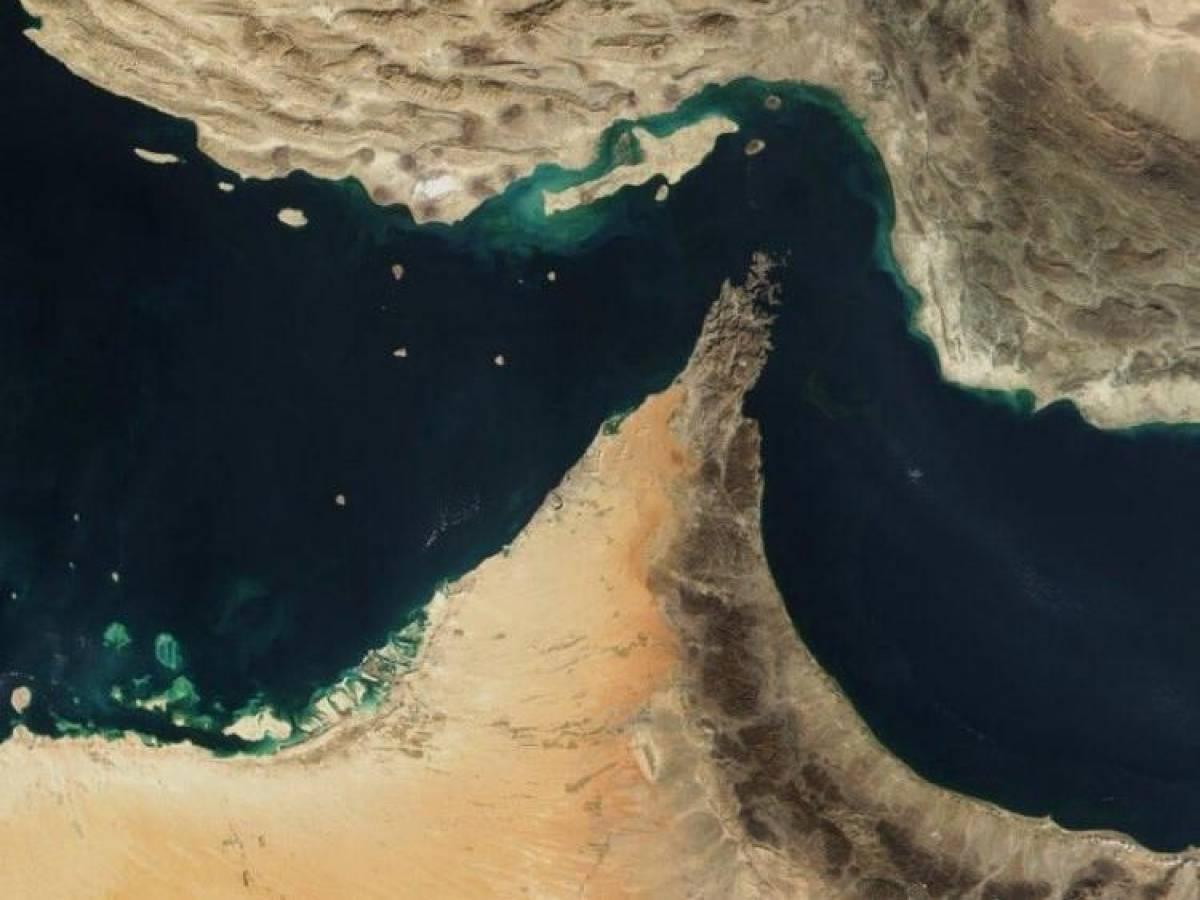
 
Strait of Hormuz blockage drives up Gulf food bills

In a supermarket in Bahrain, Mahmoud Ali fills his cart as usual. The shelves remain stocked despite the war in the Middle East, but the blockade of the main shipping routes into the Gulf is now being felt at checkout.

“There’s no shortage”, but over the past few days “there has been a noticeable increase in the price of certain food products”, the father of four said.

The price of meat in particular has almost doubled, he added.

Like most of its neighbours in this arid region, the small Gulf monarchy depends heavily on imports, especially for its food supply.


How the U.S. Military’s Quiet Response to Atrocities Enables the Next One​


Blaming the machine will be the first refuge of an empire that has spent decades perfecting the art of killing without accountability.​


The US military is remaining silent right now about the extent to which Claude AI was used in choosing a girls’ school in Iran for attack by a Tomahawk missile. Well, that’s their default response and it’s been one for quite some time. They used it after Mỹ Lai. They used it after Abu Ghraib. They used it to prolong the war in Afghanistan more than 20 years without ever admitting what wasn’t working.

Claude AI was used in U.S. targeting operations in Iran, and a U.S. Tomahawk missile ultimately struck the girls’ school because the military relied on outdated targeting data. The Pentagon won’t say whether Claude generated or approved coordinates used in that strike, and nobody has confirmed or denied Claude’s direct role in selecting the school as a target.

Like you, this attack on a girl’s school has left me beyond devastated. We did that. The current US government shot missiles at children and does not seem to be taking full accountability.

 
1000078006.webp
 

US and allied radar sites in the Middle East struck at least 10 times: Visual analysis​


In the early days of the war with Iran, which began more than two weeks ago, Iran and its proxies repeatedly targeted the sensitive missile defense infrastructure that underpins the early warning system used by the United States and its allies.

An ABC News analysis of satellite imagery and verified videos suggest that at least 10 radar sites have been struck by Iranian drones or missiles since the start of the war, including apparent damage to radar systems that rely on rare components and cost hundreds of millions of dollars.

While the extent of the damage cannot be verified, available imagery suggests that Iranian drones and missiles have been successful in targeting some of the facilities that house the sensitive equipment.

"It is incredibly expensive, really delicate and unbelievably vulnerable," said William Alberque, who previously served as the director of NATO's Arms Control, Disarmament, and Non-Proliferation Centre.

vv-2-ht-er-260317_1773787116927_hpEmbed_5x3.jpg


US may remove sanctions on Iranian oil stranded in tankers, Bessent says​


WASHINGTON, March 19 (Reuters) - The U.S. may soon remove sanctions on Iranian oil stranded on tankers at sea, Treasury Secretary Scott Bessent said on Thursday as Washington seeks to curb prices soaring over Iran's closure of the Strait of Hormuz.

"In the coming days, we may unsanction the Iranian oil that's on the water. It's about 140 million barrels," Bessent told Fox Business Network's "Mornings with Maria" program.

He said the release of the sanctioned Iranian oil into global supplies would help keep oil prices down for the next 10 to 14 days. ⁠Oil prices have been above $100 per barrel for much of the past two weeks as Iran has closed the Strait of Hormuz to shipping and has attacked tankers.

The Treasury recently took a similar step to temporarily allow the sale of sanctioned Russian oil stranded on tankers, which Bessent said added around 130 million barrels to global supplies.


Everyone but Trump Understands What He’s Done​

Allied leaders know that any positive gesture they make will count for nothing.

Donald Trump does not think strategically. Nor does he think historically, geographically, or even rationally. He does not connect actions he takes on one day to events that occur weeks later. He does not think about how his behavior in one place will change the behavior of other people in other places.

He does not consider the wider implications of his decisions. He does not take responsibility when these decisions go wrong. Instead, he acts on whim and impulse, and when he changes his mind—when he feels new whims and new impulses—he simply lies about whatever he said or did before.

For the past 14 months, few foreign leaders have been able to acknowledge that someone without any strategy can actually be president of the United States. Surely, the foreign-policy analysts murmured, Trump thinks beyond the current moment. Surely, foreign statesmen whispered, he adheres to some ideology, some pattern, some plan. Words were thrown around—isolationism, imperialism—in an attempt to place Trump’s actions into a historical context. Solemn articles were written about the supposed significance of Greenland, for example, as if Trump’s interest in the Arctic island were not entirely derived from the fact that it looks very large on a Mercator projection.


Iran’s Real War Is Against the Global Economy​


Iran may be losing the military contest with the United States. But it is fighting a different war—one aimed at the global economy.

Over the past 12 days, the United States has demonstrated clear military superiority. Iran’s navy has been severely degraded, with more than 50 ships sunk or damaged; its retaliatory missile launches are down more than 90 percent; and its air force has been grounded. On the battlefield, the scorecard favors Washington, despite risks of escalation.

Strategically, the picture is far less certain. Even as the Trump administration struggles to define its objectives—be it decapitating Iranian leadership, destroying Iran’s nuclear capability, or pursuing regime change—it must confront a new reality.

The United States and Israel are fighting the Islamic Republic. Iran is fighting the global economy.


Israel launches new wave of strikes on Iran despite Trump urging restraint, as regional conflict escalates and energy markets reel​


Israel launches new wave of strikes on Iran despite Trump urging restraint, as regional conflict escalates and energy markets reel

Israel carried out a new wave of airstrikes against Iran on Friday, intensifying a conflict that has already spread across the Gulf and disrupted global energy markets, despite calls for restraint from Donald Trump.

The Israeli military said it had begun targeting infrastructure linked to what it described as the “Iranian terror regime” in Tehran, though it provided no further operational details.

The latest escalation comes a day after Trump publicly said he had urged Israeli Prime Minister Benjamin Netanyahu not to strike Iranian energy infrastructure, warning such actions could further destabilize global markets and deepen the conflict. Netanyahu later confirmed the request but indicated Israel had acted independently in previous strikes, including an attack on Iran’s South Pars gas field.


US Aircraft Losses Mount Amid High-Tempo Airstrike Campaign​

At least 16 US military aircraft have been lost since the start of the war with Iran, including 10 Reaper strike drones hit by enemy fire and a half-dozen other planes badly damaged in attacks or accidents.

The most serious losses were because of accidents: three US F-15s downed by friendly fire in Kuwait, and a KC-135 tanker destroyed during a refueling operation. All six crew members on the tanker were killed in the accident.

Five other KC-135s were reportedly damaged by an Iranian missile strike while parked at an airfield in Saudi Arabia.

So far only the uncrewed Reapers have been brought down by Iranian defenses, with at least nine being destroyed in the air, according to a person familiar with the matter. One was hit at an airfield in Jordan by a ballistic missile, people familiar with the matter said.


Which Iranian Air Defense System Targeted F-35 and Why russia Was Clearly Involved​


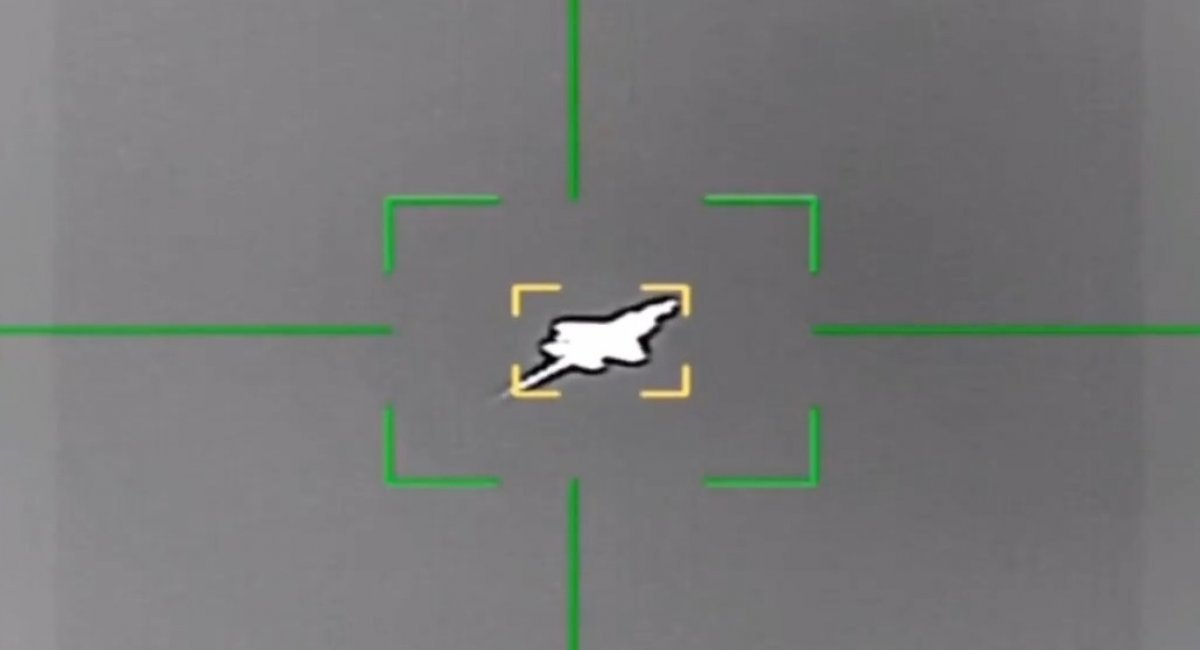
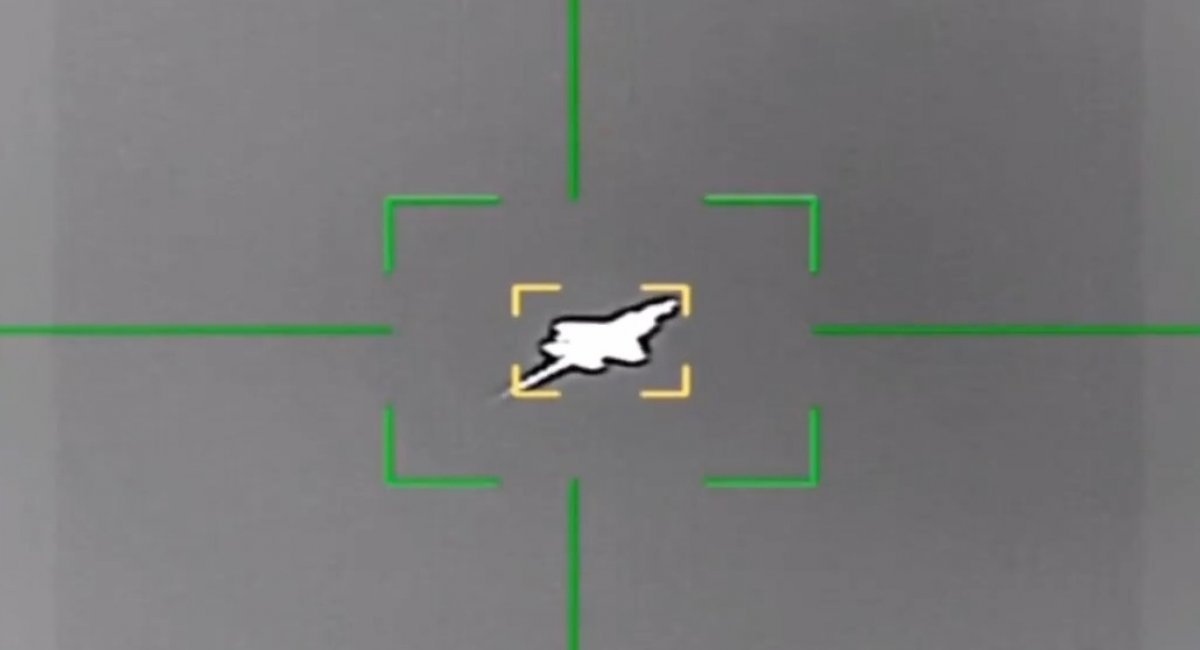
The Islamic Revolutionary Guard Corps (IRGC), which announced it had hit an F-35, operates only two types of air defense systems, and only one that could theoretically do it clearly shows russian Buk-2M features

At this point, all available evidence indicates that Iran was able to hit a fifth‑generation American F‑35 fighter jet. Although the fighter sustained some damage as a result of the strike, it did not lose control and continued its flight.

Initially, the IRGC released a thermal imaging video showing an F-35, a missile approaching it, and the missile detonating next to the fighter jet.

The U.S. Air Force has not yet officially commented on the incident. However, several U.S. media outlets have already received confirmation from their own sources that the F-35 sustained damage and made an emergency landing at a base in the Middle East.

7b069bd14db22571.jpg


Father of service member killed in Iran war said he never told Pete Hegseth to 'finish' the job​

Hegseth said "family after family" of service members killed urged the administration to “not stop until the job is done." The father said he appreciated the compassion that Hegseth and Trump showed him during their visit.

WASHINGTON — Defense Secretary Pete Hegseth met privately Wednesday with the families of six service members who died in the Iran war and, in a press briefing the next morning, said the message he got was consistent and supportive.

“What I heard through tears, through hugs, through strength and through unbreakable resolve was the same from family after family. They said, ‘Finish this. Honor their sacrifice. Do not waver. Do not stop until the job is done,’” Hegseth said.

One of the people he met at Dover Air Force Base in Delaware was Charles Simmons. His 28-year-old son, Tech. Sgt. Tyler H. Simmons, was among the six crew members killed when their refueling plane crashed in Iraq last week.

Simmons recalled his exchange differently.

“I can’t speak for the other families. When he spoke to me, that was not something we talked about,” he told NBC News in an interview Thursday.


The IRGC Just Put a Toll Booth on 21% of Global Oil​


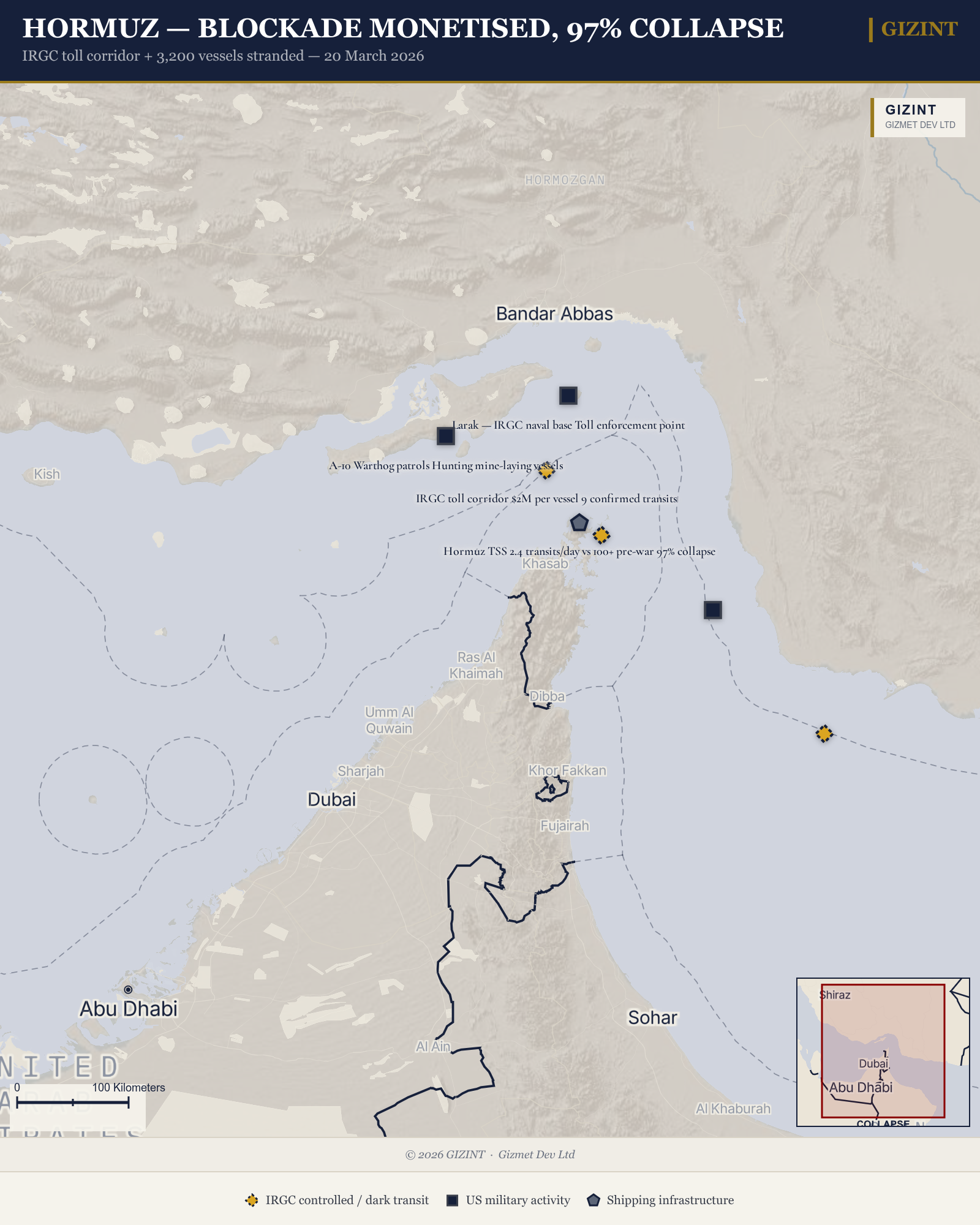
Nine vessels have paid two million dollars each to transit the Strait of Hormuz under IRGC escort. Five nations are negotiating access. The blockade just became a business.
The IRGC is charging $2M per vessel to pass through the Strait of Hormuz. Nine ships have paid. Five countries — India, Pakistan, Iraq, Malaysia, and China — are negotiating formal access through IRGC-linked intermediaries. Twenty-one nations signed a freedom-of-navigation statement. Zero sent warships.

This is not a blockade anymore. It is a toll booth on 21% of global oil supply.

Lloyd's List confirmed the managed transit corridor on 20 March. Ships must submit ownership and cargo data before entering. Two Indian LPG tankers, six bulk carriers, and one Pakistani oil tanker have transited under these terms. Meanwhile, traffic through the Strait has collapsed 97% below pre-conflict levels — from over 100 daily crossings to 2.4 (Windward, 18 Mar). The IMO confirmed 3,200 vessels carrying 20,000 seafarers are stuck west of the Strait. They proposed an evacuation framework — not a transit framework.


hormuz-011-2026-03-20-v2.png


Back
Top