

kymnjoro
Elder Lister
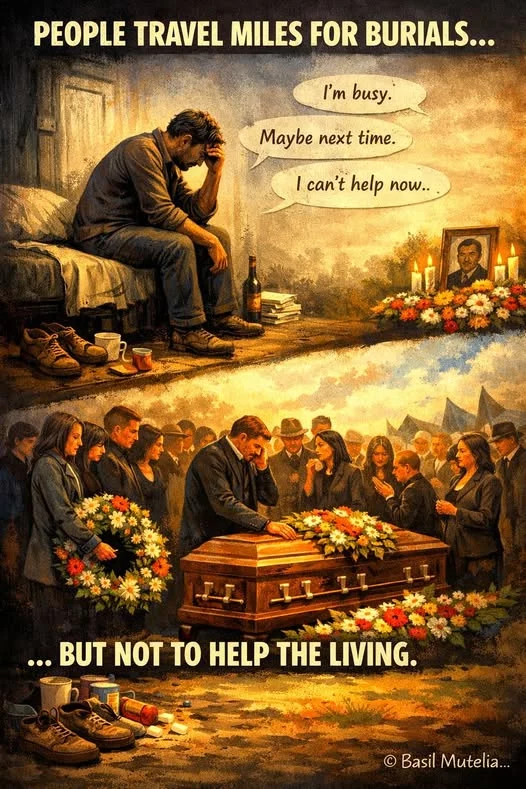
There is a painful truth woven into modern society: people will travel miles, rearrange schedules, and spend money to attend a burial, yet when that same person was alive and struggling, help was scarce and excuses were plenty. This contradiction reveals more about us as a society than we are often willing to admit.
When someone is alive, their needs are inconvenient. They may need financial support, emotional presence, time, patience, or advocacy. These demands require sacrifice, consistency, and discomfort. Helping a living person means getting involved in their problems, sharing their burdens, and sometimes facing situations that have no immediate recognition or reward. For many, this feels too costly.
In contrast, a burial is predictable and socially accepted. It comes with a clear timeline, defined rituals, and public visibility. Attending a funeral is often seen as a moral obligation, a cultural expectation, or a way to demonstrate respect. It is easier to show up for a burial because it requires less emotional investment and no long-term commitment. Once the ceremony is over, life moves on.
Ironically, funerals are also moments when guilt speaks louder than compassion ever did. People show up carrying regret for calls not made, visits postponed, and help withheld. Wreaths replace words of encouragement that were never spoken. Condolence messages stand in for support that could have changed a life while there was still time.
This behavior highlights a deeper issue: we are more comfortable honoring the dead than supporting the living. We praise resilience after it is no longer needed. We celebrate lives only when they are no longer present to feel the appreciation. In doing so, we miss the true essence of humanity—showing up when it actually matters.
If we are honest, the greatest respect we can give someone is not at their burial, but during their lifetime. It is in the small acts of kindness, the willingness to listen, the decision to help without being asked, and the courage to stand with someone in their darkest moments.
Presence while someone is alive has the power to heal, restore dignity, and even save lives.
Society does not need more crowded funerals. It needs more compassion in real time. Fewer excuses when help is required. More action when someone is still breathing, still hoping, and still fighting.
The question is not whether people will show up when life is over—they always do. The real question is whether we will learn to show up while it still counts.
When someone is alive, their needs are inconvenient. They may need financial support, emotional presence, time, patience, or advocacy. These demands require sacrifice, consistency, and discomfort. Helping a living person means getting involved in their problems, sharing their burdens, and sometimes facing situations that have no immediate recognition or reward. For many, this feels too costly.
In contrast, a burial is predictable and socially accepted. It comes with a clear timeline, defined rituals, and public visibility. Attending a funeral is often seen as a moral obligation, a cultural expectation, or a way to demonstrate respect. It is easier to show up for a burial because it requires less emotional investment and no long-term commitment. Once the ceremony is over, life moves on.
Ironically, funerals are also moments when guilt speaks louder than compassion ever did. People show up carrying regret for calls not made, visits postponed, and help withheld. Wreaths replace words of encouragement that were never spoken. Condolence messages stand in for support that could have changed a life while there was still time.
This behavior highlights a deeper issue: we are more comfortable honoring the dead than supporting the living. We praise resilience after it is no longer needed. We celebrate lives only when they are no longer present to feel the appreciation. In doing so, we miss the true essence of humanity—showing up when it actually matters.
If we are honest, the greatest respect we can give someone is not at their burial, but during their lifetime. It is in the small acts of kindness, the willingness to listen, the decision to help without being asked, and the courage to stand with someone in their darkest moments.
Presence while someone is alive has the power to heal, restore dignity, and even save lives.
Society does not need more crowded funerals. It needs more compassion in real time. Fewer excuses when help is required. More action when someone is still breathing, still hoping, and still fighting.
The question is not whether people will show up when life is over—they always do. The real question is whether we will learn to show up while it still counts.