

Eng'iti
Elder Lister
Demonstration effects.
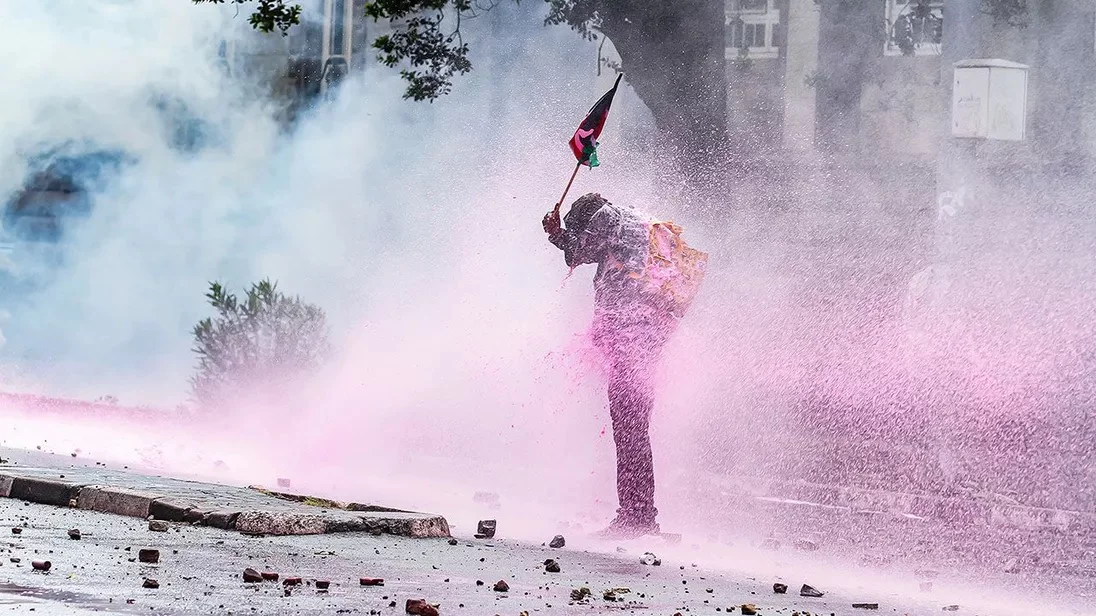
Photograph: Boniface Muthoni/ Sopa Images/ Zuma/ Eyevine
MARA AND NAIROBI
What drives African protests, and what can they achieve?
THE MAN that Prisicka wanted to vote for had been thrown into jail and so last October, when polling day came, she took to the streets.
Tanzanians across the country did the same. Only when the police started shooting did they see that “this was war”, she says. Security forces killed hundreds of people, maybe thousands. Where she lives, in the Mara region, the smell of dead bodies wafted from the bush. How many people were killed may never be known: a commission that is supposed to investigate the deaths had its deadline extended for the second time on April 4th.
It is not just Tanzania.
In the past couple of years, young Kenyans stormed parliament, post-election protests paralysed Mozambique and a popular uprising helped topple the president in Madagascar. These revolts show the deep dissatisfaction of Africans with the status quo, and their tenacity in seeking to change it. But can they produce better results? The street has long been a feature of African politics.
Adam Branch, of Cambridge University, and Zachariah Mampilly, of the City University of New York, identify a wave of anti-colonial protest in the 1940s and 1950s, and another against austerity and one-party rule in the 1980s and 1990s.
A third wave of protest against economic hardship and elite capture began in the late 2000s and continues today. The Armed Conflict Location and Event Data project (ACLED), a monitoring group, reckons that the number of African protests has held steady since the start of the decade, at about 12,000 a year.
Members of “Gen Z”—those aged 14 to 29, or around 30% of Africans—are too young to remember older struggles. Yet they are on the front line today. In Madagascar last year demonstrators marched beneath a cartoon Jolly Roger flag, borrowed from similar uprisings in Asia.
The soundtrack of Mozambique’s protests in 2024 was the music of Azagaia, an outspoken rapper who died the year before. “Did you go for the maandamano (protest)?” has become the kind of question you might ask on a date, says Wanjiru Kingori, a first time protester in Kenya. Social media are a big driver, having overtaken radio as the most popular source of daily news for young Africans for the first time in the 2020s, according to Afrobarometer, a pollster.
Activists in the diaspora share leaks and stir up dissent. A former model in Los Angeles was one of the leading voices of Tanzania’s protests in October; a rapper in Canada helped galvanise demonstrations against a former president of Senegal in 2024. Yet these are not mere youth revolts.
In surveys by Afrobarometer a person aged 18-25 is only about 25% more likely to have attended a protest in the previous year than someone 20 years older. Wanjira Wanjiru, a Kenyan activist, points out that the first people on Nairobi’s streets included older women, furious at the demolition of their homes after floods.
In Afrobarometer surveys, trust in every public institution, from presidents to parliaments to courts, is falling among Africans everywhere, reflecting broad dissatisfaction with the perceived inability and unwillingness of politicians to help people cope with social and economic change.
In the eyes of many, the rigging of the economy and the ballot are one and the same. Ask Prisicka why she demonstrated in Tanzania and she mentions her right to raise her voice, but also complains about government loans given out “based on who you know”. In Mozambique, protests about electoral malpractice in 2024 turned into a revolt against the ruling elite, as mobs burned police stations, raided factories and invaded mines.
In the upheavals of the 1990s, trade unions and non-governmental organisations played a prominent role. Their deep pockets and established structures helped keep action going on the streets. These days they are less active.
The footsoldiers of today’s revolts are the hustling class who scrape a living from odd jobs, like hawking goods or driving motorbike taxis, already hardened by day-to-day struggles with police. Protests, like livelihoods, are often improvised and hard to sustain.
The biggest uprisings also draw in the precarious middle class, and even scions of the elite, spilling off university campuses into a labour market with few formal jobs. Kenya’s protests in 2024 were notable for the mass participation of the middle classes (one politician complained that they were showing up to rallies in Ubers).
When Sudanese revolutionaries ousted Omar alBashir, the country’s long-time dictator, in 2019, professional associations of doctors, lawyers and teachers were at the fore. That can help: the sons and daughters of generals are much harder to shoot. Unarmed revolutionaries are always hoping for the army to turn, as it did in Madagascar, where an elite unit pushed the president out.
More often, security forces inflict capricious violence upon the urban poor, killing many who were not protesting at all. Tanzanians describe bystanders being shot in their homes.
Governments from Kenya to Nigeria have hired thugs to beat demonstrators, loot shops and sow chaos. Even where protests achieve their initial aims, the euphoria is often short-lived. Sudan has collapsed into civil war.
Burkina Faso, which rose up in 2014, has since had two military coups and is ruled by an autocratic junta (see next story). Still, protesters everywhere hope that the creaking old order will eventually be toppled. “This won’t end today or tomorrow,” says a motorbike-taxi driver in Tanzania, who saw two men shot dead during last year’s election protests. “It’s from generation to generation.”
Photograph: Boniface Muthoni/ Sopa Images/ Zuma/ Eyevine
MARA AND NAIROBI
What drives African protests, and what can they achieve?
THE MAN that Prisicka wanted to vote for had been thrown into jail and so last October, when polling day came, she took to the streets.
Tanzanians across the country did the same. Only when the police started shooting did they see that “this was war”, she says. Security forces killed hundreds of people, maybe thousands. Where she lives, in the Mara region, the smell of dead bodies wafted from the bush. How many people were killed may never be known: a commission that is supposed to investigate the deaths had its deadline extended for the second time on April 4th.
It is not just Tanzania.
In the past couple of years, young Kenyans stormed parliament, post-election protests paralysed Mozambique and a popular uprising helped topple the president in Madagascar. These revolts show the deep dissatisfaction of Africans with the status quo, and their tenacity in seeking to change it. But can they produce better results? The street has long been a feature of African politics.
Adam Branch, of Cambridge University, and Zachariah Mampilly, of the City University of New York, identify a wave of anti-colonial protest in the 1940s and 1950s, and another against austerity and one-party rule in the 1980s and 1990s.
A third wave of protest against economic hardship and elite capture began in the late 2000s and continues today. The Armed Conflict Location and Event Data project (ACLED), a monitoring group, reckons that the number of African protests has held steady since the start of the decade, at about 12,000 a year.
Members of “Gen Z”—those aged 14 to 29, or around 30% of Africans—are too young to remember older struggles. Yet they are on the front line today. In Madagascar last year demonstrators marched beneath a cartoon Jolly Roger flag, borrowed from similar uprisings in Asia.
The soundtrack of Mozambique’s protests in 2024 was the music of Azagaia, an outspoken rapper who died the year before. “Did you go for the maandamano (protest)?” has become the kind of question you might ask on a date, says Wanjiru Kingori, a first time protester in Kenya. Social media are a big driver, having overtaken radio as the most popular source of daily news for young Africans for the first time in the 2020s, according to Afrobarometer, a pollster.
Activists in the diaspora share leaks and stir up dissent. A former model in Los Angeles was one of the leading voices of Tanzania’s protests in October; a rapper in Canada helped galvanise demonstrations against a former president of Senegal in 2024. Yet these are not mere youth revolts.
In surveys by Afrobarometer a person aged 18-25 is only about 25% more likely to have attended a protest in the previous year than someone 20 years older. Wanjira Wanjiru, a Kenyan activist, points out that the first people on Nairobi’s streets included older women, furious at the demolition of their homes after floods.
In Afrobarometer surveys, trust in every public institution, from presidents to parliaments to courts, is falling among Africans everywhere, reflecting broad dissatisfaction with the perceived inability and unwillingness of politicians to help people cope with social and economic change.
In the eyes of many, the rigging of the economy and the ballot are one and the same. Ask Prisicka why she demonstrated in Tanzania and she mentions her right to raise her voice, but also complains about government loans given out “based on who you know”. In Mozambique, protests about electoral malpractice in 2024 turned into a revolt against the ruling elite, as mobs burned police stations, raided factories and invaded mines.
In the upheavals of the 1990s, trade unions and non-governmental organisations played a prominent role. Their deep pockets and established structures helped keep action going on the streets. These days they are less active.
The footsoldiers of today’s revolts are the hustling class who scrape a living from odd jobs, like hawking goods or driving motorbike taxis, already hardened by day-to-day struggles with police. Protests, like livelihoods, are often improvised and hard to sustain.
The biggest uprisings also draw in the precarious middle class, and even scions of the elite, spilling off university campuses into a labour market with few formal jobs. Kenya’s protests in 2024 were notable for the mass participation of the middle classes (one politician complained that they were showing up to rallies in Ubers).
When Sudanese revolutionaries ousted Omar alBashir, the country’s long-time dictator, in 2019, professional associations of doctors, lawyers and teachers were at the fore. That can help: the sons and daughters of generals are much harder to shoot. Unarmed revolutionaries are always hoping for the army to turn, as it did in Madagascar, where an elite unit pushed the president out.
More often, security forces inflict capricious violence upon the urban poor, killing many who were not protesting at all. Tanzanians describe bystanders being shot in their homes.
Governments from Kenya to Nigeria have hired thugs to beat demonstrators, loot shops and sow chaos. Even where protests achieve their initial aims, the euphoria is often short-lived. Sudan has collapsed into civil war.
Burkina Faso, which rose up in 2014, has since had two military coups and is ruled by an autocratic junta (see next story). Still, protesters everywhere hope that the creaking old order will eventually be toppled. “This won’t end today or tomorrow,” says a motorbike-taxi driver in Tanzania, who saw two men shot dead during last year’s election protests. “It’s from generation to generation.”
****